

Dopamine dressing for men means using one bold color or print as an anchor to lift your mood and confidence, then building the rest of the outfit around it in neutrals. The fastest way to test it: grab one standout shirt, pair it with plain chinos and simple sneakers, and see how you feel in it before buying anything else.
TL;DR:
- Wearing one bold, personally meaningful color or print can boost confidence and alter how you carry yourself, provided fit and texture are also right.
- Bright, saturated colors like yellow or orange are perceived as friendly and energetic, while blue and green evoke calm and steadiness, making them safer starting anchors.
- The outfit’s success depends on proper fit, limited accessories, and neutral support pieces, with texture and scale playing crucial roles in avoiding a chaotic look.
- Testing dopamine dressing with one high-quality, confidently fitting shirt can reveal if it genuinely lifts your mood and encourages more frequent wear.
- In conservative workplaces or formal events, subtle use of color-like a pocket square or textured blazer-offers a way to introduce vibrancy without overstepping boundaries.
Table of Contents
- What Dopamine Dressing Actually Means for Men
- Which Colors Actually Shift Your Mood
- A Simple Routine for Building Your First Dopamine Outfit
- Why Fit and Texture Matter More Than the Color Itself
- Three Outfits You Can Copy This Week
- Keeping It Wearable Instead of Chaotic
- The Real Psychological Payoff for Men
- Making Dopamine Dressing Work at Work, Casually, and for Formal Events
- Common Misconceptions About Dopamine Dressing for Men
- Making It Stick as an Actual Habit
- A Perspective on Why Most Men Overthink This
- Try One Shirt Before You Commit to a Whole New Wardrobe
- Sources
- FAQ
What Dopamine Dressing Actually Means for Men
The term describes choosing bright, expressive clothing specifically to feel better, not just to look good. It grew out of color psychology discussions online and spread fast once social media amplified the trend, with men experimenting alongside women despite most early coverage skewing feminine in tone.
Here’s the honest limit: no shirt directly rewires your brain chemistry. What actually happens is more grounded. Wearing a color or pattern you genuinely like tends to boost self-perception and mood, and that shift in how you feel about yourself often changes how you carry yourself in a room. The clothing is the trigger, not the mechanism. Your personal association with a color (that green because it reminds you of your favorite team, that orange because it feels like summer) matters more than any universal color chart.
Which Colors Actually Shift Your Mood
Warm, saturated colors like yellow, orange, and red tend to read as energetic and approachable. They’re the ones people notice first in a room, and men who wear them are often perceived as more outgoing, even if that’s not their usual personality. Blue and green sit on the other end. They project calm, steadiness, and a quieter form of confidence, which makes them safer entry points if bright red feels like too much too soon.
The trick isn’t wearing five saturated colors at once. It’s picking one anchor and letting neutrals do the supporting work, a method style guides consistently recommend over full maximalism.
A few practical starting points:
- Yellow or orange works well as a low-stakes first anchor because it reads as friendly rather than aggressive.
- Cobalt blue or emerald green gives you the mood lift without the “look at me” intensity of red.
- Contrast is what makes an anchor piece look intentional instead of accidental. Dark pants under a bright shirt reads as a choice; two loud pieces together reads as confusion.
- Black or white shoes ground almost any bright top without competing for attention.
Statistic Callout: Color and mood research remains an evolving field, but multiple style explainers point to a real, if modest, link between brighter saturated colors and improved mood. The catch is that personal association often overrides general color psychology charts, so the color that lifts your mood might not be the one a textbook predicts.
A Simple Routine for Building Your First Dopamine Outfit
You don’t need a stylist or a closet overhaul. You need four steps and about fifteen minutes.
- Pick one anchor piece. A bright shirt, a patterned jacket, or even a bold cap. This is the only “loud” item in the outfit.
- Add two neutral support pieces. Think gray, navy, olive, or tan pants, plus a simple undershirt or layer if needed. Neutrals let the anchor do its job without a fight for attention.
- Bring in one texture or subtle pattern, no more. A woven belt, textured chinos, or a slightly patterned sock counts. Skip a second loud print entirely.
- Run the fit check. A bright piece that’s too big or too tight reads as sloppy, not confident. If the fit is off, size down or up before you commit to wearing it out.
Once it’s on, do a ten to fifteen minute confidence test at home. Walk around, catch yourself in a mirror, notice whether your shoulders relax or your posture straightens. That reaction is the actual signal you’re testing for, not whether the color matches some chart.
Pro Tip: Try the outfit on with the shoes you’ll actually wear. Sneakers versus loafers change how a bright shirt reads more than people expect, and it’s the fastest way to catch a mismatch before you leave the house.
Why Fit and Texture Matter More Than the Color Itself
A bold color in a shirt that fits poorly doesn’t read as dopamine dressing. It reads as a shirt that doesn’t fit. Bright pieces amplify everything, including sloppy tailoring, so a shirt that’s a size too big will draw attention for the wrong reason.
Texture is what separates a curated look from a costume. A single textured piece, whether that’s linen, a woven pattern, or a subtle boucle knit, adds depth without adding visual noise. The same logic applies to how fabric affects tone: a silk shirt with a sharp print reads more polished than the same print on stiff synthetic, a distinction visible in how designer shirt lines like Orlebar Brown use material choice to shift a shirt’s whole mood.
A few rules keep this simple:
- One medium or large print as your anchor is plenty. Two competing prints in the same outfit usually clash instead of complementing each other.
- Stick to one textured element per outfit. Textured pants and a textured shirt together start to look busy rather than intentional.
- Let the anchor piece’s pattern set the scale. A big tropical print wants plain pants; a small geometric print can handle slightly more texture elsewhere.
Three Outfits You Can Copy This Week
These three looks each target a different mood and setting, and you can build any of them around a single Danflashes piece without touching the rest of your wardrobe.
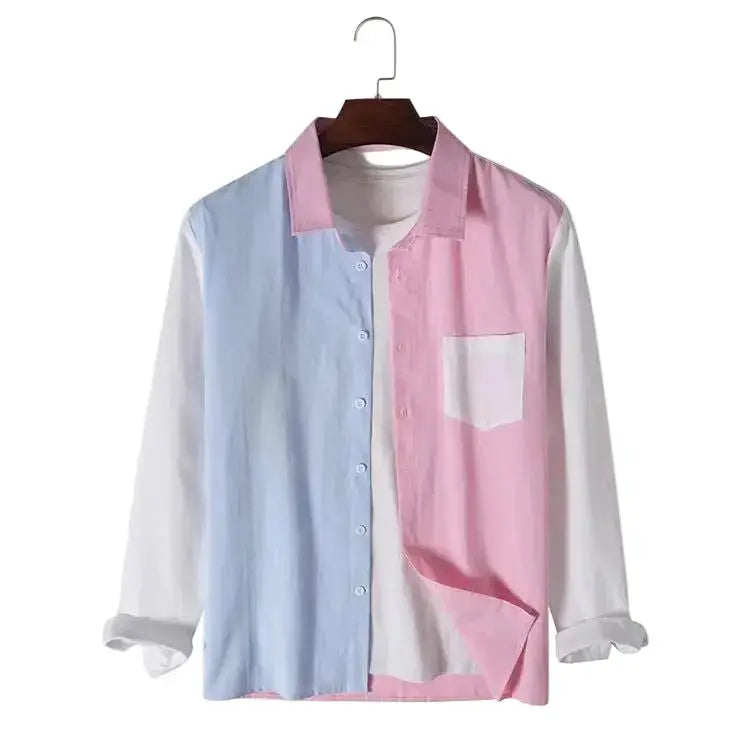
- Smart-casual confidence: the Colorblock Patch Long Sleeve Shirt with dark denim and loafers. This one reads more put-together, which makes it a solid pick for dinner plans, a date, or a casual Friday at an office that allows some personality.
- Summer statement: the Patchwork Long Sleeve Shirt with linen shorts and sandals. Keep the shirt untucked or half tucked to maintain proportion, since patchwork prints already carry a lot of visual weight on their own. This combination fits vacations, beach days, or any outdoor event where comfort matters as much as color.
Keeping It Wearable Instead of Chaotic
The line between dopamine dressing and looking like you got dressed in the dark is thinner than people think. A few habits keep you on the right side of it.
- Start small. One anchor piece is the whole method, not a limitation.
- Keep the fit sharp on every piece, especially the loud one.
- Limit accessories. A watch and one bracelet is plenty; five accessories competing with a bright shirt is visual noise.
- Skip any color you don’t personally like, even if a guide says it’s trending.
| Keep doing this | Watch for this | |
|---|---|---|
| Color | One saturated anchor with neutral support | Two or more loud colors fighting for attention |
| Fit | Tailored or true-to-size on the anchor piece | Baggy or overly tight bright pieces |
| Accessories | One or two simple pieces | A stack of accessories pulling focus from the outfit |
If people comment on your outfit looking “off” rather than “great,” that’s usually a fit problem, not a color problem. Fix the fit before you blame the shirt.
The Real Psychological Payoff for Men
The benefit isn’t really about the shirt. It’s about what wearing it does to your posture, your eye contact, and your willingness to strike up a conversation. Men who consistently avoid color often default to the same three or four safe outfits, which can quietly reinforce a flatter mood over time simply because getting dressed becomes automatic instead of intentional.
Introducing one bold piece breaks that pattern without asking you to become a different person. You’re not performing extroversion. You’re giving yourself a small, repeatable reason to notice yourself in the mirror and feel something other than neutral about it. That’s a low bar, but it’s a meaningful one, especially for men who were taught that clothing should be functional and forgettable rather than expressive.
There’s also a practical side effect worth naming: a shirt that gets compliments tends to get worn again, and repetition builds comfort with color faster than any single big outfit swing does. The goal isn’t a dramatic wardrobe overhaul. It’s a small, sustained shift in how getting dressed feels day to day.
Making Dopamine Dressing Work at Work, Casually, and for Formal Events
Context changes how much color you can get away with, but it doesn’t rule out dopamine dressing entirely in any setting.
At work, especially in more conservative offices, keep the anchor piece smaller: a patterned tie, a bright sock, or a textured pocket square instead of a full loud shirt. If your workplace allows more casual dressing, a colorblock or patterned shirt under a blazer can work as the anchor while the blazer keeps things professional.
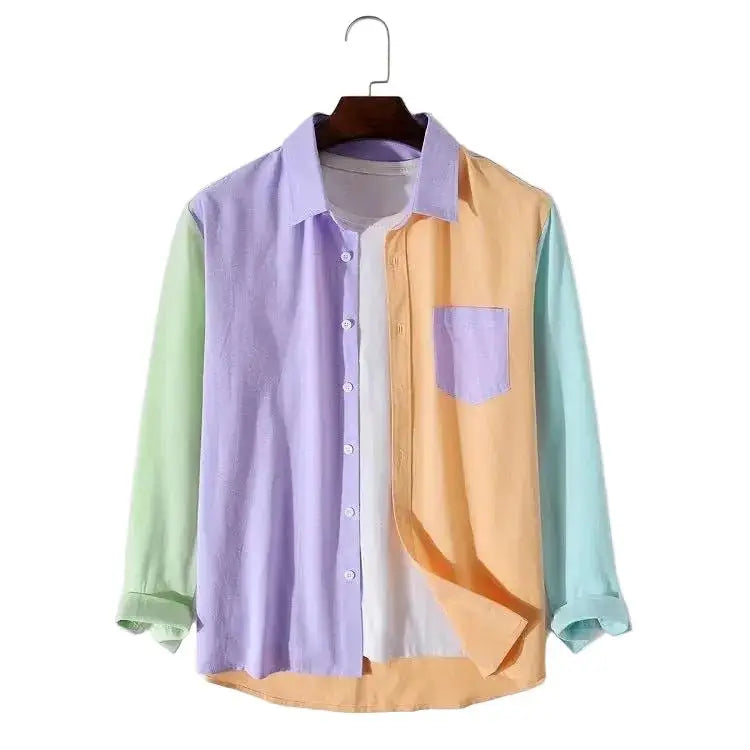
Casual settings are the easiest place to start, which is exactly why the Multi-Color Long Sleeve Shirt and similar pieces work well for weekends. There’s no dress code friction, so you can go bolder with the anchor and skip most of the restraint rules that apply at the office.
Formal events call for a different approach: think saturated color in a well-tailored blazer or a patterned pocket square rather than a loud shirt. The formality of the cut lets you get away with more color than you’d expect, as long as the tailoring is sharp and the rest of the outfit stays simple.
Common Misconceptions About Dopamine Dressing for Men
The biggest misconception is that dopamine dressing requires wearing several bright colors at once. It doesn’t. Most style guidance points the opposite direction: one anchor, neutral support, done.
The second misconception is that the trend guarantees a mood boost the way a medication would. It doesn’t work that way. The effect is closer to a nudge than a switch, tied heavily to whether you genuinely like the color and how it fits, not some fixed chemical reaction that happens the moment you put on red.
A third misconception, especially among men newer to color, is that dopamine dressing is only for younger or more fashion-forward guys. Social platforms did drive early adoption among younger users, but the core method, one anchor piece done well, works at any age since it relies on fit and restraint rather than trend-chasing.
Finally, some men assume this means throwing out their existing wardrobe. It doesn’t. You’re adding one or two anchor pieces to what you already own, not replacing your closet. That’s the entire appeal for anyone who wants results without a total reset.
Making It Stick as an Actual Habit
The men who keep dopamine dressing going past the first month treat it as a small addition, not a project. Buy one piece. Wear it a few times. Notice how it feels. Then decide whether a second anchor piece earns a spot in the rotation.
Rotating two or three anchor pieces through your week keeps the look from feeling repetitive without requiring a big wardrobe. A multi-color print one day, a colorblock shirt a few days later, and a plain neutral day in between keeps color from becoming background noise.
Pay attention to which pieces you actually reach for after the initial excitement fades. That’s your real signal, more useful than any style guide, about which colors and prints genuinely lift your mood versus which ones just looked good on a screen. Building a habit out of this means favoring the pieces that keep earning wear over the ones that only got worn once for the novelty.
A Perspective on Why Most Men Overthink This
Most guidance on this topic treats color like a math problem: mix the right hues, hit the right ratios, get the right result. That’s backwards for most men starting out. The real barrier isn’t knowledge, it’s inertia. Men default to gray and navy because it’s the path of least resistance, not because they’ve weighed the color psychology and concluded neutral wins.
Danflashes builds around vibrant shirts in cotton, linen, and sustainable bamboo hemp precisely because material and print quality determine whether a bold shirt looks intentional or costume-like. A cheap, stiff print in a wrong-fit shirt undercuts the whole idea before you even leave the house. Testing this trend doesn’t need to carry financial risk either. A Buy 3 Get 1 Free structure and a 30-day money-back guarantee mean you can try an anchor piece without betting your whole clothing budget on whether you’ll actually wear it.
The mistake most men make isn’t picking the wrong color. It’s waiting for certainty before trying anything at all.
- Dan Flashes
Try One Shirt Before You Commit to a Whole New Wardrobe
If the outfits above got your attention, the shirts behind them are all live on the site right now. The Multi-Color Long Sleeve Shirt, the Colorblock Patch Long Sleeve Shirt, and the Patchwork Long Sleeve Shirt are the exact pieces used in the three looks above, and each one works as a standalone anchor piece if you’d rather test the idea with a single purchase before going further.
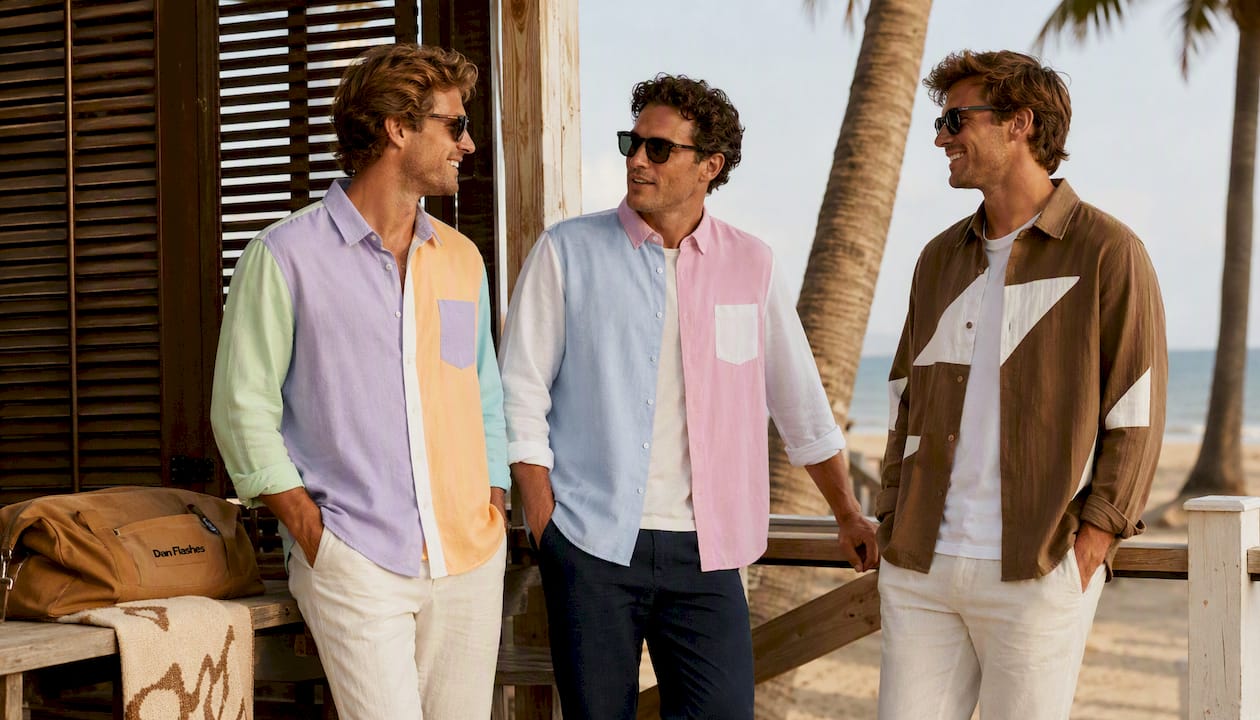
Low-commitment testing is made easier by some menswear stores through offers such as money-back guarantees and multi-buy discount structures that encourage building out a small rotation instead of buying one shirt and stopping. If bright, intricate prints aren’t quite your speed yet, browsing the wider Hawaiian shirt collection or the patterned shirt lineup gives you more entry points at different intensity levels, from a subtle floral print to a full tropical statement piece.
Start with one shirt. Wear it once this week. If it earns a second wear on its own, you’ll know the anchor piece method is working for you, and the party shirt or camp collar options are there when you’re ready to add a second one to the rotation.
Sources
- What Is Dopamine Dressing? New Viral Fashion Trend Focused On Feel-Good Style | Republic World
- Dopamine Dressing Meaning: The Mood-Boosting Style Trend | STYLEFINDEN
FAQ
What is the 3-3-3 rule for dressing men?
There’s no single fixed “3-3-3 rule” for men’s dopamine dressing, but a practical adaptation is three parts: one anchor piece, two neutral support pieces, and one texture or subtle pattern. It’s a simplified way to apply the anchor-plus-neutrals method that style guides recommend without overcomplicating the outfit.
Does dopamine dressing really work?
It doesn’t guarantee a chemical mood shift, but wearing colors you genuinely like tends to improve how you feel about yourself and how you carry yourself. The effect comes from personal association and confidence rather than a universal color formula, which is why research on the topic stays cautious about overstating the science.
What are some outfits that make guys go crazy about their own style?
Outfits built around one confident anchor piece, like a colorblock or patchwork shirt paired with simple neutrals, tend to generate the most compliments and the most personal satisfaction. The Multi-Color Long Sleeve Shirt paired with plain chinos is a reliable starting combination for exactly that reaction.
How do I start dopamine dressing without overhauling my wardrobe?
Buy one bold shirt or accessory and wear it with clothes you already own. Style guides consistently point to this single-piece approach as the easiest way to test whether bold color actually improves your mood before committing further.


