Wash linen shirts on a gentle cold or lukewarm cycle with a mild liquid detergent, skip the bleach and fabric softener, and pull them out promptly to reshape by hand. Air-dry or tumble on low for just a few minutes, then hang while still damp. Iron with steam while the fabric holds moisture for a crisp, wrinkle-free finish.
TL;DR:
- Use cold or lukewarm water and a mild liquid detergent, avoiding bleach and fabric softener to preserve linen’s breathability and prevent shrinkage.
- Air drying linen shirts flat while reshaping prevents wrinkles more effectively than tumble drying or iron alone.
- Iron linen while damp at high heat with steam, using a pressing cloth for darker or printed fabrics, and avoid dragging the iron to prevent fiber stretching.
- Quickly blot or pre-treat stains with gentle methods using oxygen bleach and avoid heat setting to prevent permanent marks.
- Store only fully dry, clean shirts on padded hangers or loosely folded, and avoid sealed plastic bags to prevent mildew and fiber damage.
Table of Contents
- How do you wash a linen shirt the right way?
- What’s the best way to dry a linen shirt?
- How do you iron linen without scorching it?
- How do you get stains out of linen without damaging it?
- How should you store linen shirts long term?
- What mistakes ruin linen shirts fastest?
- Why linen shirt care is part of what you’re actually buying
- Find linen shirts built for real wear, not just the rack
- Sources
How do you wash a linen shirt the right way?
Start by checking the care label. Most linen shirts sold today are machine-washable, but blends, dark dyes, or shirts with structured collars sometimes call for hand washing instead. When in doubt, hand wash the first time and watch how the fabric responds.
Here’s the sequence that keeps linen looking sharp wash after wash:
- Sort by color and turn the shirt inside out to protect the outer surface from friction.
- Button it up so the placket doesn’t stretch or catch on other items in the load.
- Select gentle or delicate cycle with cold water or lukewarm water. Most fabric-care guides put the safe range around 30°C to 40°C, and Vogue’s linen care guide is blunt about the risk: hot water shrinks linen fibers.
- Use a mild liquid detergent. Powder detergents can leave residue trapped in the weave, and optical brighteners will dull colored linen over time.
- Skip the fabric softener entirely. It’s tempting when a fresh-off-the-line shirt feels stiff, but softener coats the fibers and blocks the breathability that makes linen valuable in warm weather in the first place.
- Run a low spin to avoid deep-set wrinkles and stress on the seams.
For hand washing, fill a basin with cool or lukewarm water, add a capful of mild detergent, and submerge the shirt gently. Swish it, don’t scrub it. Rinse until the water runs clear, then press out excess water. Never wring linen. Twisting the fibers under tension is one of the fastest ways to warp a collar or distort a hem.
On that first wash, expect a small amount of shrinkage as factory sizing washes out. It’s normal, usually minor, and part of why buying true-to-size rather than snug is smart with linen.
What’s the best way to dry a linen shirt?
Air drying wins over the dryer almost every time. Pull the shirt out of the wash, give it a firm shake, and smooth the collar, cuffs, and seams flat with your hands while the fabric is still cooperative. Charles Tyrwhitt’s linen guide makes the same point: shaping linen while it’s damp does more to prevent wrinkles than any amount of ironing later.
- Hang the shirt on a broad hanger, not a wire one, so shoulders keep their shape.
- Dry it in shade or indoors. Direct sun fades color and can weaken fibers over repeated exposure.
- If you use a dryer, run it on the lowest heat setting for just a few minutes, enough to loosen wrinkles, then pull the shirt out while it’s still slightly damp.
- Finish drying on the hanger rather than letting the dryer run to bone dry, which is what causes that cardboard stiffness.
- Lay any delicate trim, embroidery, or knit collar detail flat to dry instead of hanging.
How do you iron linen without scorching it?
Linen irons best while it’s still a little damp, not bone dry. If it’s already dried, mist it lightly with a spray bottle before you start.
- Set the iron to high heat with steam, assuming the care label allows it.
- Start with the collar, working from the points inward, then move to the cuffs.
- Press the placket next, followed by the sleeves, then the body panels last.
- Use a lift-and-press motion rather than dragging the iron, which can stretch the weave.
For darker or printed linen, iron from the inside out, or lay a thin pressing cloth over the fabric. The Spruce’s ironing guide flags this as the main defense against that shiny, flattened look heat can leave on colored fabric. A handheld steamer is a solid substitute if you want a more relaxed, less severe finish, and light starch on the collar and cuffs only can help those areas hold their crispness through a full day of wear.
Pro Tip: Keep a small spray bottle of water next to your ironing board. Thirty seconds of misting saves you from waiting for a whole shirt to steam back up if it’s dried out too much.
How do you get stains out of linen without damaging it?
Speed matters more than force. Blot a fresh stain, don’t rub it. Rubbing pushes the stain deeper into the weave and can fray the fibers around it.
- Blot liquid spills immediately with a clean cloth or paper towel.
- For oil-based stains, sprinkle cornstarch or baking soda over the spot and let it sit for a few minutes to absorb before brushing off.
- Pre-treat wine or grease marks with a dab of dish soap or an enzyme-based stain remover, worked in gently before washing.
- For set-in or stubborn stains, soak the shirt in cool or lukewarm water mixed with oxygen bleach, never chlorine bleach, which breaks down linen fibers over time.
- Check the spot has actually lifted before drying or ironing. Heat sets a stain permanently, so confirm it’s gone first.
How should you store linen shirts long term?
Only store shirts that are completely clean and fully dry. Any lingering body oil or faint stain can oxidize over months in storage and turn into a yellow mark that’s far harder to remove than the original spot.
- Hang shirts on wide, padded hangers to keep shoulder shape, or fold them loosely if hanger space is tight.
- Avoid sealed plastic garment bags. Linen needs airflow, and trapped moisture invites mildew.
- Use breathable cotton garment bags, and toss in a cedar block or silica packet to deter moths and control humidity.
- Rotate which shirts you wear regularly. A shirt worn once and lightly aired often doesn’t need a full wash, which cuts down on fiber wear over its lifetime. Our guide to storing natural-fiber shirts covers this rotation approach in more detail.
What mistakes ruin linen shirts fastest?
Hot water is the top offender, followed closely by high-heat tumble drying, wringing the fabric by hand, cramming too many items into one wash load, and reaching for fabric softener out of habit. Every one of these either shrinks the fibers, weakens the weave, or coats it in residue that blocks breathability.
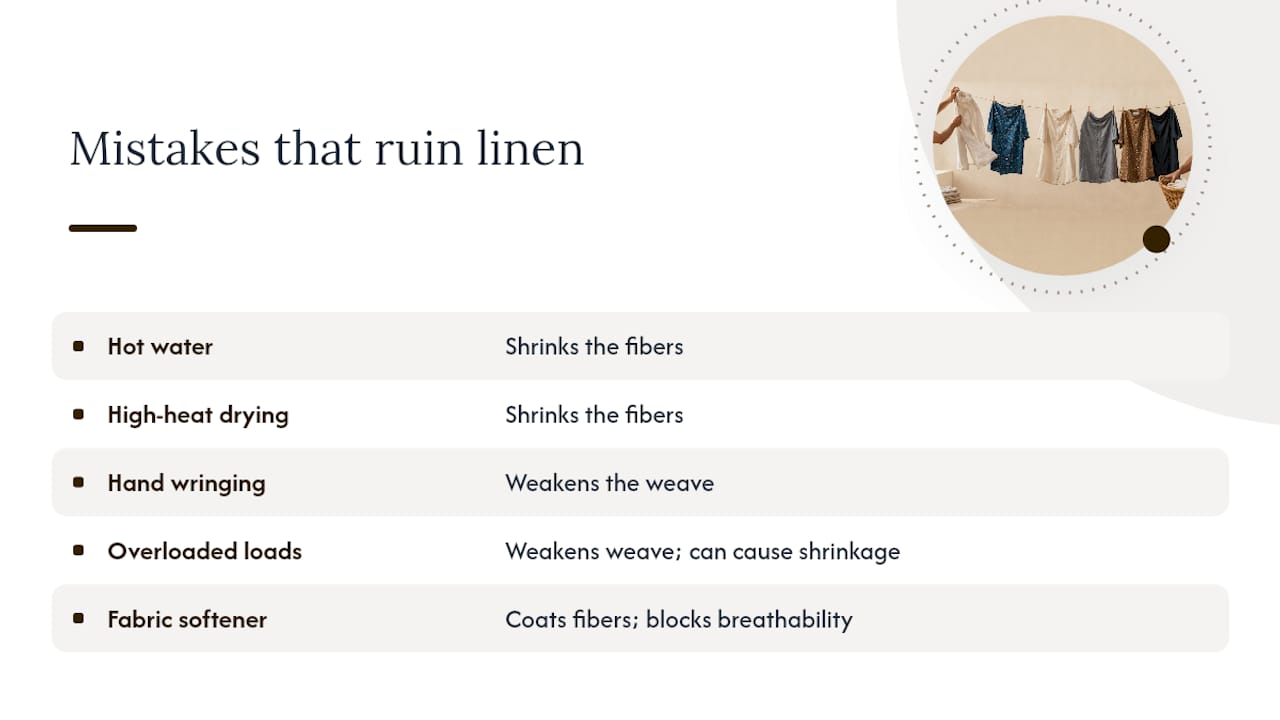
Three habits fix most of that: button the shirt and turn it inside out before washing, use a mesh laundry bag if it’s going in with other clothes, and pull it out to reshape while still damp rather than letting it sit crumpled in the machine. If a linen piece has structured tailoring, shoulder pads, or heavy interior lining, that’s when professional cleaning is worth the cost. Everyday casual linen shirts rarely need it.
Pro Tip: Set a phone timer the moment your wash cycle ends. Linen left balled up in the drum for even twenty extra minutes wrinkles in ways a hot iron can’t fully undo.
Why linen shirt care is part of what you’re actually buying
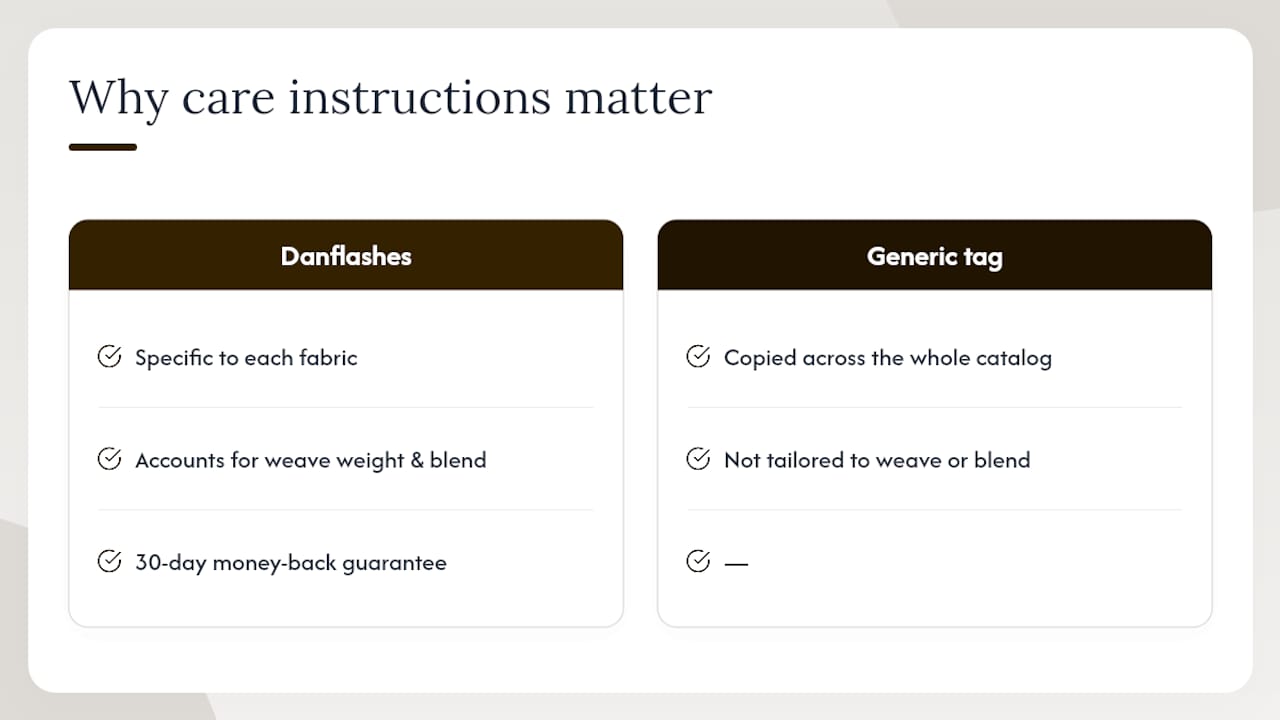
Danflashes builds every linen and linen-blend shirt with care instructions specific to that fabric, not a generic tag copied across the whole catalog. That matters because linen behaves differently depending on weave weight and blend ratio, and a shirt that runs warm on cotton-linen blends needs slightly different handling than 100% linen.
If a first wash leaves a shirt fitting tighter than expected, that’s the shrinkage this guide already covers, and it’s exactly why Danflashes backs every order with a 30-day money-back guarantee. Buy with confidence, wash smart, and check the full Hawaiian shirt care guide for more brand-specific detail.
— Dan Flashes
Find linen shirts built for real wear, not just the rack
Most linen shirts on the market come with a care tag and nothing else. Danflashes goes further: every button-up linen shirt lists its exact blend and weight, so you know before it arrives whether it needs a gentle cold cycle or can handle a warmer wash.

That matters more than it sounds. A 100% linen shirt and a linen-cotton blend don’t shrink, soften, or iron the same way, and guessing wrong on wash temperature is how a great shirt ends up two sizes tighter. Danflashes pairs that clarity with bold, distinct patterns you won’t find on a rack of plain oxford shirts, plus a Buy 3 Get 1 Free offer that makes building a full rotation of easy-care shirts cheaper per piece. Browse the men’s casual shirt collection and pick a few in different blends. If the fit or feel isn’t right once it arrives, the 30-day money-back guarantee covers you.
Sources
- How to Wash Linen the Right Way | Vogue
- How to iron linen clothes | The Spruce
- How to Care for Linen | Charles Tyrwhitt
- Linen Shirt Care: Washing & Tips Guide | Fioboc