Bamboo fabric sustainability depends almost entirely on one thing: what happens to the plant after it’s harvested. Raw bamboo is genuinely low-impact, fast-growing, and light on water and pesticides. But most “bamboo” clothing on shelves is bamboo viscose, a chemically processed fiber that can erase much of that advantage. The fix is learning to tell mechanically processed bamboo linen, standard viscose/rayon, and closed-loop lyocell apart, then checking labels and certifications before you buy.
TL;DR:
- Most bamboo clothing labeled as “bamboo” is actually viscose or rayon, produced through chemically intensive processes that negate many of the plant’s environmental benefits.
- Only bamboo lyocell offers a closed-loop, low-chemical option that minimizes environmental and health risks, but it remains less common and more costly.
- Certifications like OEKO-TEX or FSC can indicate safer, more sustainable bamboo products, but specific fiber process descriptions are crucial for accurate assessment.
- Sourcing transparency and detailed fiber labeling are essential for consumers to avoid products made from chemically processed bamboo viscose.
- Growing practices matter; bamboo cultivated on diverse land with responsible land management has a lower biodiversity impact than monoculture plantations.
Table of Contents
- What “Bamboo Fabric” Actually Means: Three Very Different Processes
- The Plant Itself Is Genuinely Impressive
- Where Bamboo Fabric Gets Its Bad Reputation
- Certifications and Label Language Worth Trusting
- A Four-Step Checklist Before You Buy
- How Bamboo Farming Affects Biodiversity and Soil
- Worker Conditions and Community Impact in Bamboo Processing
- Dan Flashes’ Approach to Bamboo Hemp
- Shirts to Check Out If You Want Bamboo Hemp in Your Rotation
- Sources
What “Bamboo Fabric” Actually Means: Three Very Different Processes
“Bamboo fabric” isn’t one material. It’s a marketing umbrella covering three production methods with wildly different footprints, and almost none of them get spelled out on a hangtag.
- Mechanically processed bamboo (bamboo linen): The stalk is crushed and combed into fiber, similar to how linen is made from flax. It’s genuinely low-chemical, but it’s coarse, stiff, and expensive to produce, which is why it’s rare in mainstream apparel.
- Viscose/rayon from bamboo: Bamboo pulp gets dissolved in a chemical bath, usually involving carbon disulfide and sodium hydroxide, then extruded into soft fiber. This is the process behind nearly every ultra-soft “bamboo” t-shirt or sheet set you’ve seen. It’s also the reason the FTC’s own guidance on bamboo fabrics exists: most of what’s sold as “bamboo” is really rayon.
- Bamboo lyocell: A closed-loop variation of the viscose process that uses a non-toxic solvent and recaptures most of it for reuse. It costs more to produce but avoids the worst chemical leakage.
Labels rarely volunteer which of these you’re getting. If a tag just says “bamboo” with no process word attached, assume it’s viscose until proven otherwise.
The Plant Itself Is Genuinely Impressive
Strip away the manufacturing question and bamboo the crop looks excellent on paper. It can reach harvestable height in a matter of years rather than decades, regenerates from its own root system without replanting, and typically needs far less irrigation and far fewer pesticides than conventional cotton. Well-managed bamboo groves also stabilize soil on slopes and can sequester meaningful amounts of carbon while growing.
An independent Tap, and that split score tells the real story: the plant itself scores high on land use and renewability, but air and water metrics drag the total down once viscose processing enters the picture.
The caveat matters just as much as the headline. Not all bamboo is grown the same way. Large single-species plantations converted from mixed forest or farmland can reduce local biodiversity and strip topsoil over time, even though the bamboo itself is renewable. A fast-growing crop grown irresponsibly is still a problem. The plant’s sustainability profile is a starting point, not a guarantee that follows the fiber all the way to your closet.
Where Bamboo Fabric Gets Its Bad Reputation
The chemistry used to turn bamboo pulp into soft viscose fiber is where most of the real environmental damage happens, and it’s well documented. Carbon disulfide, one of the primary solvents in the process, carries occupational health risks recognized by NIOSH, including nervous system effects for workers with prolonged exposure. Sodium hydroxide, used in the same process, is corrosive and requires careful handling to avoid worker injury and wastewater contamination.
- Open-loop viscose facilities have been the subject of industry investigations into effluent discharge, with chemical runoff reaching local waterways in regions with weak enforcement.
- Air emissions from solvent evaporation during processing are a separate, less-discussed hazard tied to the same open-loop facilities.
- Energy and water demand during the pulping and dissolving stages are substantial regardless of loop type, though closed systems recover more of what they use.
- Bamboo lyocell processing recovers roughly 98 to 99 percent of its solvent, which is the single biggest lever for cutting chemical exposure and waterway contamination compared to standard viscose.
Pro Tip: If a product page doesn’t specify “lyocell” or “closed-loop,” assume standard open-loop viscose. The softness feels identical, but the manufacturing risk profile is not.
Certifications and Label Language Worth Trusting
You don’t need a chemistry degree to shop smarter. You need to know which three-letter acronyms actually mean something.
- OEKO-TEX Standard 100 tests the finished fabric for harmful substances above safe thresholds. It says nothing about how the fiber was processed, but it does confirm the final product isn’t carrying chemical residue.
- GOTS (Global Organic Textile Standard) covers organic fiber content plus environmental and social criteria through the supply chain, though it applies mainly to cotton and other organic fibers rather than bamboo viscose specifically.
- FSC certification on bamboo sourcing confirms the bamboo came from a responsibly managed forest or plantation, addressing the biodiversity and land-use concerns raised earlier.
- Precise fiber wording matters more than any logo. “Rayon made from bamboo,” “bamboo lyocell,” and “mechanically processed bamboo linen” each describe a specific, checkable process. “Eco bamboo fabric” describes nothing.
Brands serious about transparency will name their fiber supplier, state whether their process is closed-loop, and link to third-party audit reports. Red flags run the other direction: vague “eco-friendly” language with no process named, a price so low it couldn’t cover lyocell’s higher production cost, and product descriptions that mention “bamboo” but never mention rayon, viscose, or lyocell anywhere.
A Four-Step Checklist Before You Buy
- Confirm the exact fiber wording. “Bamboo lyocell” and “rayon from bamboo” are not interchangeable claims, even if the garment feels the same.
- Look for OEKO-TEX, GOTS, or FSC marks, and check whether the brand names its fiber supplier anywhere on the product page.
- Check the blend. A bamboo-cotton blend biodegrades differently than a bamboo-polyester blend, and synthetic content can block composting entirely.
- Weigh durability against footprint. A well-made bamboo lyocell shirt worn for five years usually beats a “greener” fabric that falls apart in one season.
Pro Tip: Email the brand and ask one question: “Is this viscose or lyocell?” A company that answers immediately with specifics is more trustworthy than one that replies with marketing copy.
How Bamboo Farming Affects Biodiversity and Soil
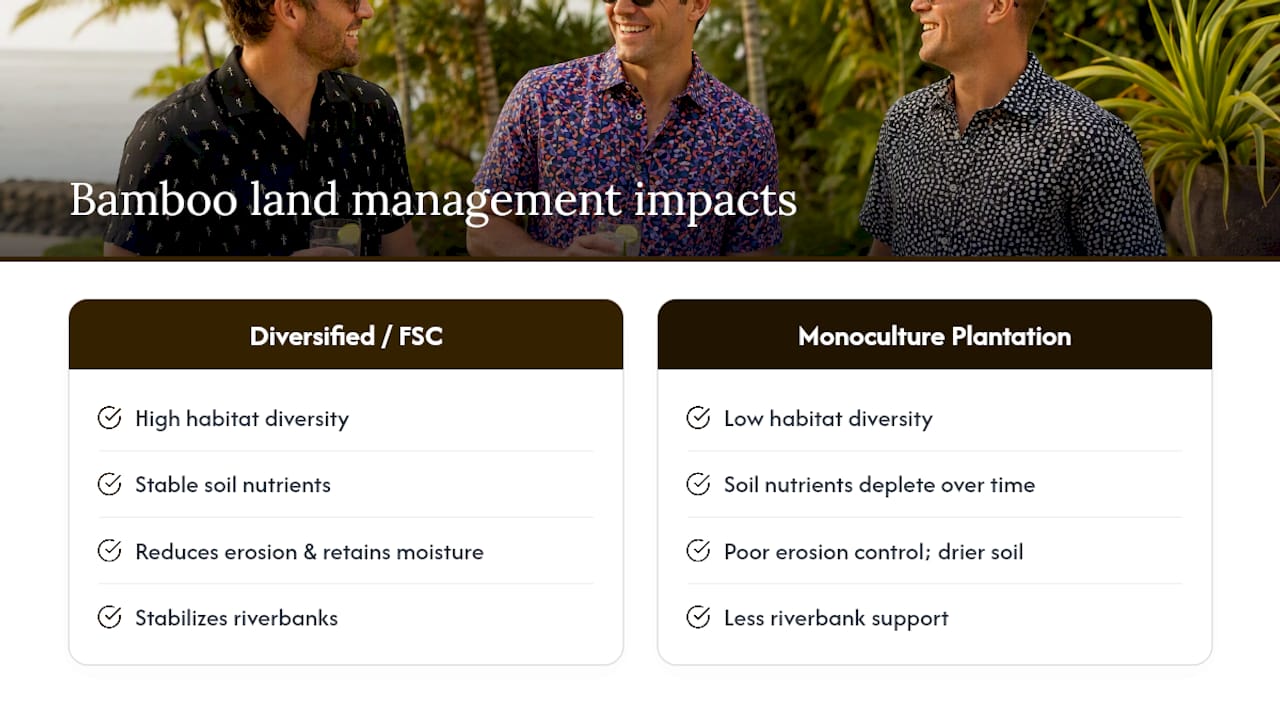
Bamboo’s biodiversity story is genuinely two-sided, and both sides matter to a shopper trying to make an informed call. On managed, mixed-species land, bamboo’s root systems bind soil aggressively, which reduces erosion on slopes and helps retain moisture during dry spells. That same root network can also stabilize riverbanks in ways that support surrounding plant and insect life.
The problem shows up when bamboo shifts from a supplementary crop to a monoculture plantation. Converting diverse forest or farmland into single-species bamboo groves reduces the range of habitats available to birds, insects, and understory plants that depended on that mixed landscape. Soil health can suffer too. Continuous single-crop cultivation without rotation gradually depletes specific soil nutrients, even for a plant as resilient as bamboo.
This is why sourcing region matters as much as the fiber itself. Bamboo grown as part of a diversified agricultural system, or under FSC oversight, carries a meaningfully different biodiversity footprint than bamboo grown on land cleared specifically for high-density, single-crop harvesting. The plant isn’t the variable here. The land management decision is. A shopper can’t see this from a hangtag, which is exactly why supplier transparency from the brand matters more for bamboo than for most other fibers.
Worker Conditions and Community Impact in Bamboo Processing
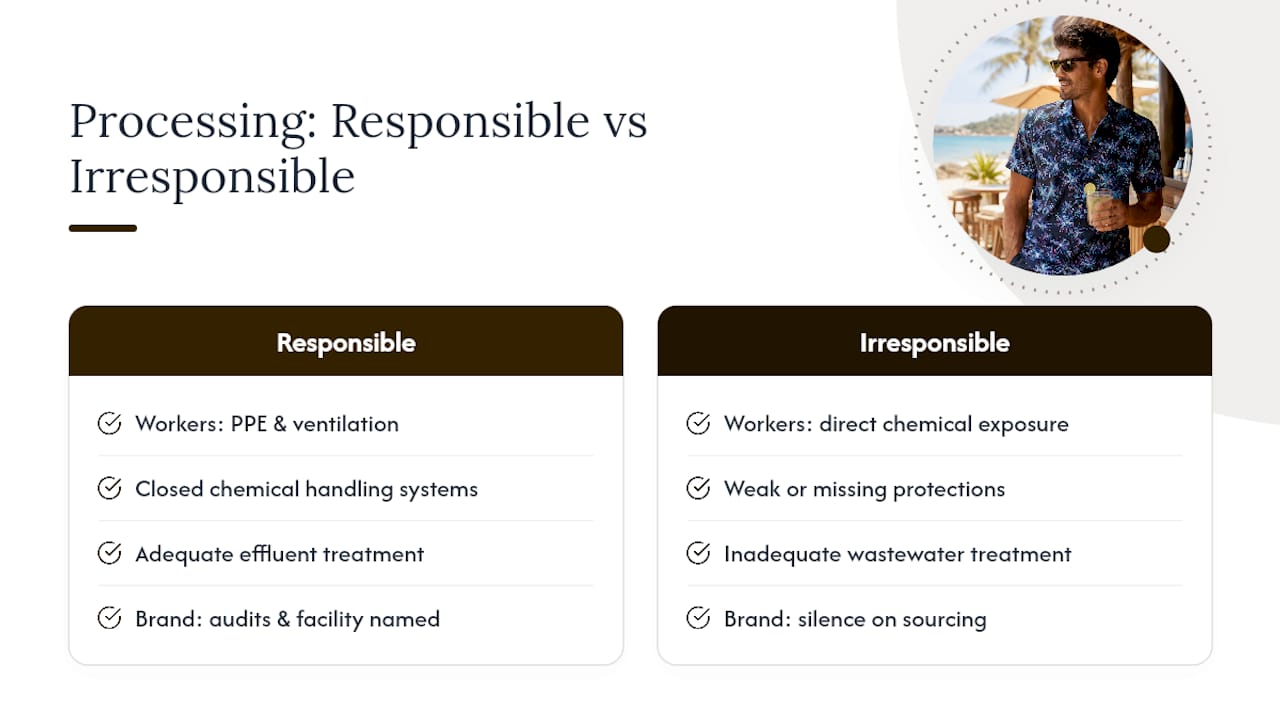
The chemical exposure risks in viscose processing aren’t abstract. They land on real workers in real facilities, and the communities living near those facilities carry the secondary burden. Carbon disulfide and sodium hydroxide handling require protective equipment, proper ventilation, and closed handling systems. Where enforcement is weak, workers face direct exposure risks that established public-health data already flags as serious.
Communities downstream of open-loop viscose plants face a related but distinct problem: wastewater effluent. Facilities without adequate treatment infrastructure can discharge process chemicals into local water systems, affecting drinking water and agriculture for people who have no stake in the garment being produced. This is a supply-chain issue, not a fiber issue. It is entirely possible to process bamboo into viscose responsibly, with proper effluent treatment and worker safety protocols, and it’s equally possible to process cotton or polyester irresponsibly.
The practical takeaway for shoppers is that labor and community conditions track closely with the same signals used to judge chemical safety. A brand publishing audit reports, naming its manufacturing facility, or holding a recognized certification is more likely to be managing worker exposure and effluent responsibly than one offering no information at all. Silence on sourcing is rarely a good sign.
Dan Flashes’ Approach to Bamboo Hemp
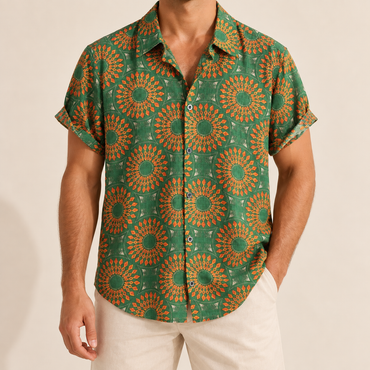
Some shirts featured use sustainable bamboo hemp, chosen because it holds color well for intricate patterns while staying breathable enough for beach and resort wear.
Bamboo hemp earns its place in the lineup for a practical reason: it balances the softness shoppers expect from bamboo-based fabric with the durability hemp fiber is known for, without the stiffness of pure mechanically processed bamboo linen. That combination matters more on a patterned shirt than on a plain tee, since a print only looks sharp if the fabric holds its shape wash after wash. Shoppers who want the specifics on sourcing and blend composition can check the sustainable fabrics used across the Hawaiian shirt line before buying, the same way this article recommends checking any brand’s fiber claims.
The lesson from bamboo’s split reputation isn’t “avoid it.” It’s “ask better questions before you buy it.” A fiber’s potential and a factory’s practices are two separate things, and only one of them shows up on a soft-feeling swatch. Judge the process, not the marketing word. - Dan Flashes
Shirts to Check Out If You Want Bamboo Hemp in Your Rotation
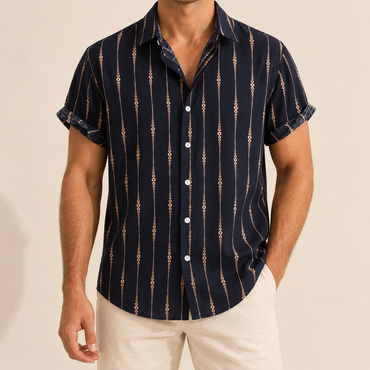
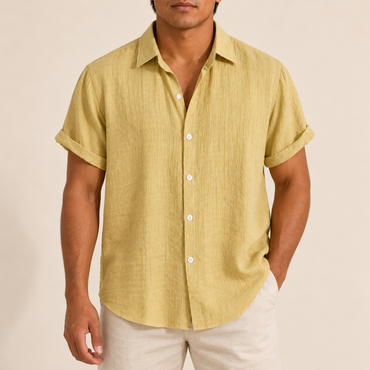
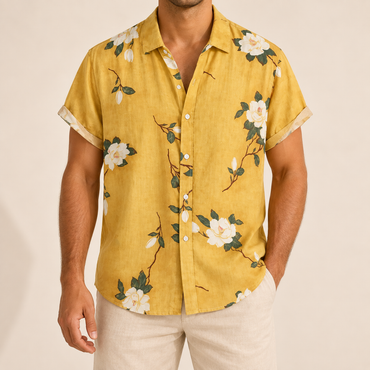
If you’re ready to put this checklist to use, a few styles worth a look include the Classic Beach Shirt for an easy everyday option, the Tropical Hawaiian Pattern Shirt if you want a bolder print, and the Premium Beach Shirt for something a step up in weight and finish.
Beyond those, the Resort Pattern Beach Shirt, Summer Pattern Shirt, Hawaiian Pattern Shirt, and Vintage Stripe Summer Shirt round out a lineup where you can compare cuts, prints, and fabric blends in sustainable materials side by side. Before checkout, do exactly what this article recommends elsewhere: open the product page and confirm the fiber wording and blend for the specific shirt you want, since not every print comes in every material. If you’d rather browse everything at once, the full beach shirt collection lets you filter by style. The website offers frequent bundle discounts and a money-back guarantee, so trying different styles alongside usual favorites carries little downside. Pick two or three prints you like and start there.