

The simplest routine that works: wash cotton shirts cold on a gentle or delicate cycle, skip the wringing, reshape the damp fabric by hand, then air-dry or tumble on no/low heat and pull the shirt out while it’s still slightly damp. Heat and agitation, not water itself, are what shrink cotton, so removing either one from the equation stops most shrinkage before it starts.
TL;DR:
- Using cold water and gentle cycles minimizes fiber relaxation, reducing the likelihood of cotton shirts shrinking during washing.
- Air drying flat or hanging shirts on a hanger prevents the stress caused by high heat and mechanical agitation that cause shrinkage.
- Fabric finishes like sanforizing significantly limit residual shrinkage to around 1%, but no fabric is completely shrink-proof.
- Applying a conditioning soak can help stretch shrunken shirts back toward their original size, especially if shrinkage is minimal.
- Blended fabrics with synthetic fibers shrink less over time, making them more suitable for low-maintenance routines.
Table of Contents
- Do This Before Every Wash: A Quick Prevention Checklist
- Why Do Cotton Shirts Shrink in the First Place?
- How Should You Wash Cotton Shirts to Avoid Shrinking?
- What’s the Best Way to Dry Cotton Shirts Without Shrinking?
- Do Fabric Blends and Labels Predict Shrinkage?
- Can You Fix a Cotton Shirt That Already Shrank?
- Dan Flashes’ Recommended Cotton Shirt Care Routine
- A Realistic Take on Cotton Shirt Care
- Shirts Built to Handle a Little Heat
- Sources
Do This Before Every Wash: A Quick Prevention Checklist
Run through this before the shirt goes anywhere near the machine:
- Check the care label for temperature and drying symbols specific to that fabric.
- Wash cold, on a gentle or delicate cycle, or hand wash for anything with a print or embroidery.
- Turn the shirt inside out to protect prints and reduce surface friction.
- Don’t overfill the washer. Cotton needs room to move without getting crushed against other items.
- Use a mild liquid detergent instead of a harsh powder formula.
- Air-dry flat or on a hanger, or pull the shirt from the dryer while it’s still damp.
- Skip high heat entirely if you can help it.
- Reshape the shirt while damp and store it folded or hung properly once dry.
Get this right consistently, and you’ll rarely think about shrinkage again.
Why Do Cotton Shirts Shrink in the First Place?
Cotton is made of cellulose fibers that get bent and stretched tight during manufacturing. Water relaxes those fibers, letting them spring back toward their natural, more compact state. That’s shrinkage in its most basic form, and it’s completely normal for untreated cotton.
Heat is what locks the damage in. When a hot dryer blasts a damp shirt, it doesn’t just remove water. It sets the fibers into their newly contracted shape, the same way heat sets a perm. Add vigorous agitation and high spin speeds, and you’re mechanically stressing and distorting fibers that are already relaxed and vulnerable.
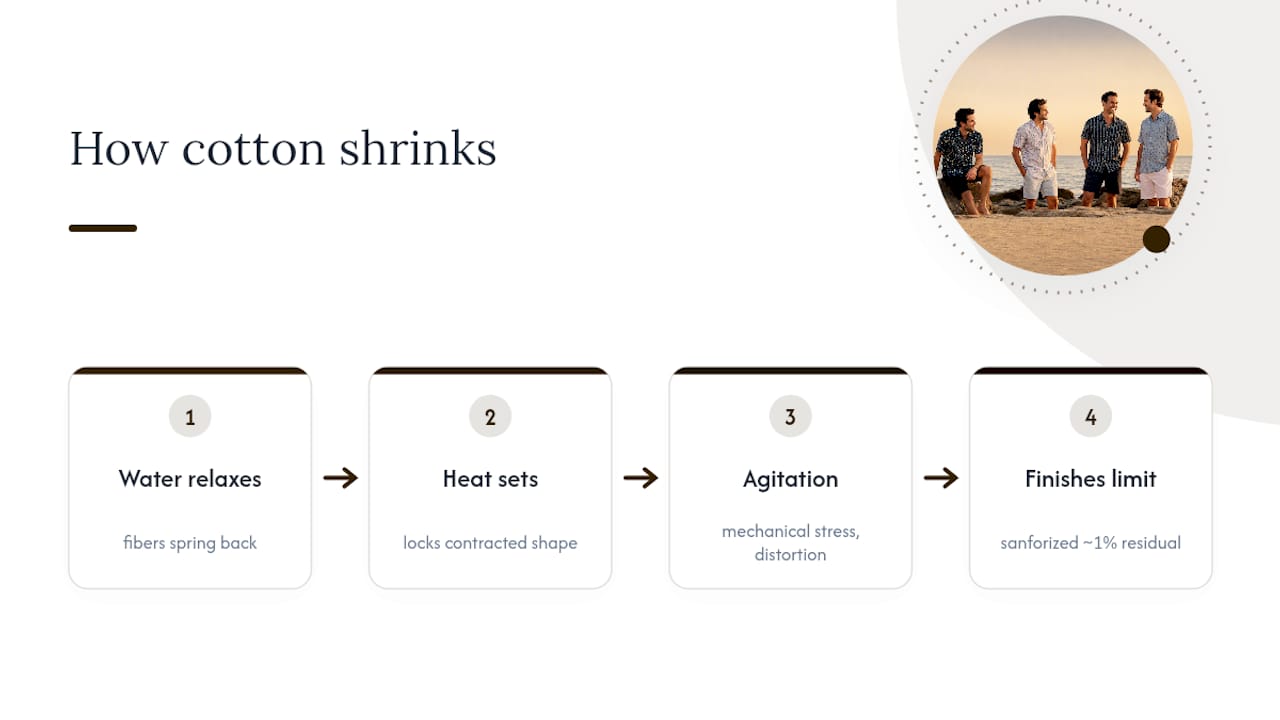
Finishes like sanforizing and mercerizing help. Sanforized cotton is pre-shrunk mechanically during manufacturing, and it typically holds residual shrinkage to around 1% or less, compared to untreated cotton that can lose several percent of its size in one hot wash. But no finish makes cotton shrink-proof. It only lowers the ceiling on how much damage heat and agitation can do.
How Should You Wash Cotton Shirts to Avoid Shrinking?
Set your washer to cold or cool water, somewhere in the 60 to 85°F range, and choose the delicate or gentle cycle every time. That single setting change handles most of the risk, since cold water and gentle cycles are the standard recommendation for keeping natural fibers from relaxing too aggressively.
- Sort cotton shirts into a load that isn’t packed tight. Overstuffed drums create friction, and friction speeds up fiber distortion.
- Turn printed or embroidered shirts inside out before loading.
- Select cold water and a gentle or delicate cycle, with a lower spin speed if your machine allows it.
- Use a small amount of mild liquid detergent. Skip bleach and strong alkaline formulas, which weaken cotton fibers over time and make them more prone to distortion under heat.
- For hand washing: soak the shirt in cool water with a splash of mild detergent for 10 to 15 minutes, gently squeeze the water through the fabric, and rinse without wringing or twisting.
Pro Tip: If a shirt is genuinely stained and needs warmer water, use the lowest effective temperature and shorten the wash time. A quick warm wash does far less damage than a long hot one.
Detergent choice matters less than people assume when it comes to shrinkage itself. Temperature and mechanical action drive the outcome, but a milder detergent protects fiber strength, which keeps shirts looking newer longer.
What’s the Best Way to Dry Cotton Shirts Without Shrinking?
Air drying is the lowest-risk option, and it’s not close. Lay knit fabrics flat so they don’t stretch out of shape under their own wet weight, and hang woven button-up shirts on a hanger so gravity does some of the reshaping for you. Keep printed shirts out of direct, blazing sun, since heat and UV exposure together can fade or crack ink over time, a concern echoed in guidance on washing screen-printed shirts without cracking the design.
If you use a dryer, keep it on no heat or the lowest heat setting and run a shorter cycle than usual. Pull the shirt out while it’s still slightly damp rather than bone dry. Finishing the last bit of drying on a hanger avoids the extended high-heat exposure that does the real damage.
- Smooth out seams and collars with your hands while the fabric is still damp.
- Square the shoulders on a hanger so the shirt hangs the way it’s supposed to.
- Gently stretch the hem and sleeves back toward their original measurements.
- Pin the shirt to a drying rack or add light weights at the hem if it needs help holding its shape.
Pro Tip: Keep a fabric tape measure handy for shirts you really care about. Measuring chest width and length after the first wash gives you a baseline to reshape toward every time after.
One hot cycle rarely ruins a shirt outright. It’s the repetition that does it. Each high-heat cycle sets a little more contraction, and those small losses compound over a season of washes.
Do Fabric Blends and Labels Predict Shrinkage?
Reading a label correctly saves you from a lot of guesswork. A few terms are worth actually understanding:
- Sanforized: mechanically pre-shrunk during manufacturing; residual shrinkage usually stays around 1%.
- Mercerized: treated for strength and sheen, with a side benefit of somewhat better shrink resistance.
- Preshrunk: a broader label claim that should mean the fabric has already gone through some shrinkage before it reached you, though the actual process behind the claim varies by manufacturer.
Poly/cotton and tri-blend fabrics shrink less overall because synthetic fibers don’t relax the way cellulose does. If low maintenance matters more to you than the exact hand-feel of 100% cotton, a blend is a reasonable trade. Pair a pre-finished fabric with a cold-wash, air-dry routine and you can keep lifetime shrinkage in the range of 1 to 2%, which is barely noticeable on a finished shirt.
Can You Fix a Cotton Shirt That Already Shrank?
A slightly shrunken shirt is often recoverable, though a shirt that’s shrunk two full sizes down isn’t coming all the way back.
- Fill a basin with lukewarm water and mix in about a third of a cup of hair conditioner or baby shampoo per gallon.
- Soak the shirt for 15 to 30 minutes so the conditioner softens and relaxes the fibers.
- Lift it out and gently stretch the fabric in the direction it needs to grow, focusing on tight spots like the collar or cuffs.
- Lay it flat on a towel, pin the edges or add light weights, and let it air-dry completely flat rather than hanging it while wet.
For a shirt that’s shrunk unevenly, a handheld steamer can loosen a specific spot before you re-stretch it. If a genuinely important shirt won’t budge, a tailor can sometimes let out seams for a little extra room. Most shrinkage happens in the first few washes and then levels off, so once a shirt survives its early cycles without disaster, it tends to hold steady from there.
Dan Flashes’ Recommended Cotton Shirt Care Routine
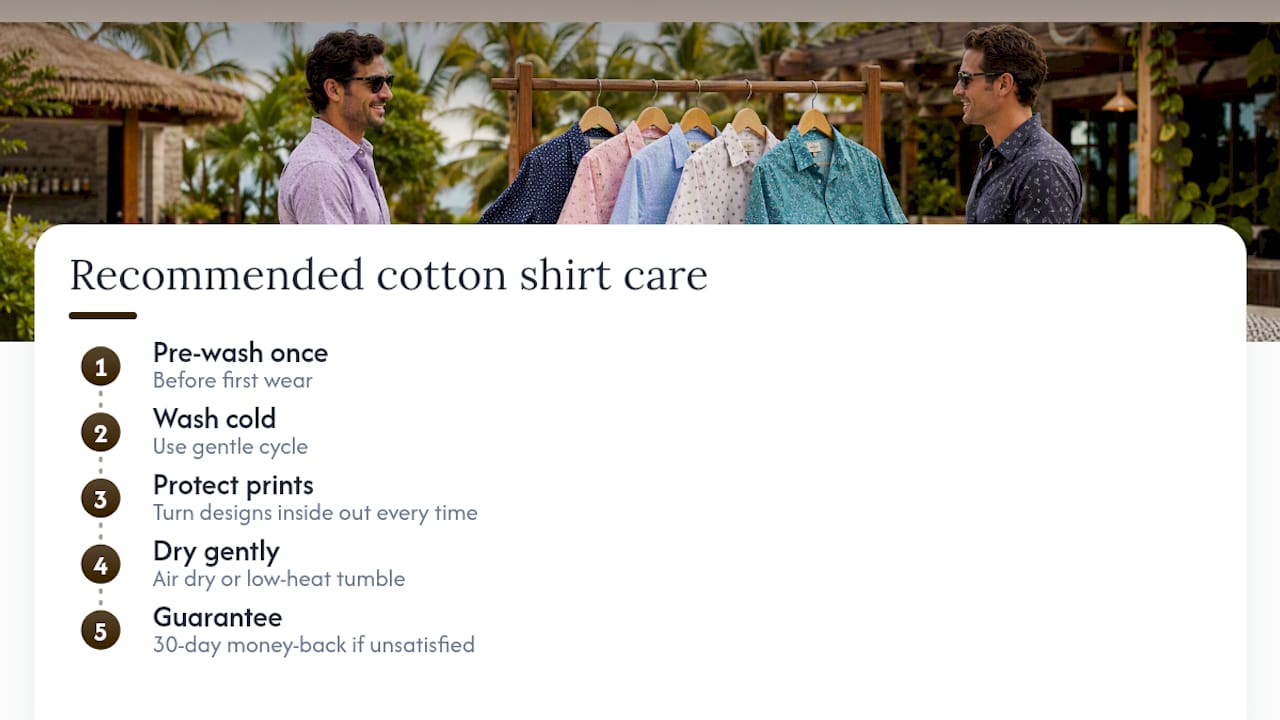
Our own recommendation for a new shirt is simple: pre-wash it once before the first wear, then stick to cold water on a gentle cycle and finish with air drying or a low-heat tumble. Turn printed designs inside out every time to protect the ink and reduce surface wear. Our guides on linen shirt care and air drying versus tumble drying go deeper on specific fabrics. And if a shirt still doesn’t hold up the way you expected, our 30-Day Refunds has you covered.
A Realistic Take on Cotton Shirt Care
Mild care habits add years to a shirt’s life, but the honest trade-off is convenience. Cold washing and air drying take a little more planning than tossing everything into one hot load, and that’s the actual cost of avoiding shrinkage. If your lifestyle doesn’t leave room for that extra step, lean toward blended fabrics that tolerate rougher treatment, and save the delicate routine for shirts you actually love. Either way, buying from a brand with a genuine return policy takes the risk out of trying something new.
- Dan Flashes
Shirts Built to Handle a Little Heat
Fabric choice does a lot of the shrink-prevention work before you ever touch the washer. Our Summer Pattern Shirt uses a cotton blend designed to hold its shape through repeated cool washes, so a slightly imperfect laundry day won’t undo the fit.

For anyone who wears a lot of printed designs, the Summer Flash Print Button-Up Shirt is worth a look. It’s built to be washed inside out on a gentle cycle without the print cracking or fading early. If you want the lowest-maintenance option in the lineup, the Premium Pattern Button-Up Shirt uses a bamboo hemp blend that naturally resists the fiber contraction pure cotton is prone to, so it holds its size with less babying.
Many shirts come with a satisfaction guarantee that allows customers to test wash their purchase and see how it holds up before fully committing. Shoppers should browse current selections and pick shirts that fit their actual laundry habits, not just their closet.
Sources
- How to not shrink clothes, according to laundry experts - Martha Stewart
- How to prevent clothes from shrinking - Whirlpool blog
- Does 100% cotton shirt shrink? - Natuclothes
- How to ‘un-shrink’ cotton clothes - RealSimple


