

Fast fashion means cheap, trend-driven clothes made fast and worn briefly; sustainable, or slow fashion means fewer garments made to last, with cleaner supply chains. The gap between the two shows up in landfills, rivers, and factory paychecks. The fix is not difficult: buy less, buy better, and keep what you own in circulation longer.
TL;DR:
- Choosing durable, long-lasting garments significantly reduces environmental impact by lowering carbon, water, and waste footprints compared to fast fashion items.
- Sustainable fabrics like organic cotton, lyocell, and recycled polyester are more eco-friendly, but trusted certifications such as GOTS and Fairtrade are key to avoiding greenwashing.
- The biggest ecological savings come from wearing clothes longer, reusing, repairing, and buying secondhand rather than focusing solely on fiber type or trendy styles.
- Mindful shopping habits, including wardrobe audits and prioritizing quality over quantity, can cut clothing-related emissions substantially more than fiber swaps.
- Garment durability, construction quality, and wear frequency directly influence the true cost and environmental footprint of clothing, making cost-per-wear a crucial buying metric.
Table of Contents
- Sustainable vs. Fast Fashion: Two Business Models, Two Sets of Consequences
- The Real Cost of Fast Fashion: Carbon, Water, and Waste
- How to Spot Real Sustainable Materials (and Greenwashing)
- Buying Smarter: The 4 R’s and Cost-Per-Wear
- How Dan Flashes Approaches Slow Fashion
- What Actually Moves the Needle on Fashion’s Footprint
- Get a Shirt Built for Cost-Per-Wear, Not the Trend Cycle
- Sources
Sustainable vs. Fast Fashion: Two Business Models, Two Sets of Consequences
Fast fashion runs on speed. Retailers push new styles weekly, price them low, and design them for a handful of wears before the trend cycle moves on. That cadence forces factories to prioritize output over craftsmanship, packs more shipping containers onto planes and cargo ships, and generates offcuts and unsold stock that often end up incinerated or landfilled.
Slow fashion runs on the opposite clock. Brands release fewer collections, charge prices that reflect actual production cost, and build garments meant to survive years of wear and washing. The difference is tactile the moment you touch two shirts side by side.
- Fabric weight: fast-fashion shirts often use thin, almost translucent cotton blends; slow-fashion pieces use denser weaves that hold shape after repeated washes.
- Construction: look for double-stitched seams and finished hems versus loose threads and unlined collars.
- Trims: metal buttons and reinforced buttonholes signal a longer intended lifespan than glued or single-stitched plastic trims.
- Fit consistency: slow-fashion brands tend to standardize sizing across runs; fast-fashion sizing shifts season to season because factories change on short notice.
These aren’t cosmetic differences. A shirt built to survive 60 washes instead of 10 changes the entire math of what you’re actually paying for and what that purchase costs the planet.
The Real Cost of Fast Fashion: Carbon, Water, and Waste
The fashion industry generates roughly 10% of global carbon emissions, putting it in the same range as international aviation and shipping combined. Fast fashion carries an outsized share of that number, and it’s also a heavy water consumer, largely from dyeing and finishing processes that dump wastewater into rivers near manufacturing hubs.
The industry generates about 92 million tonnes of textile waste globally every year - most of it synthetic material that won’t break down for decades, some of it shedding microplastics into water systems every time it’s washed.
The social side gets less attention but matters just as much:
- Garment workers in fast-fashion supply chains frequently earn wages below local living-wage benchmarks.
- Factory audits are often self-reported, with little independent verification.
- Subcontracting layers make it hard to trace which factory actually produced a given batch.
- Overtime during peak trend cycles is common and rarely disclosed on labels.
Sustainable brands don’t automatically solve all of this, but transparency (published supplier lists, third-party audits) is usually the first thing that separates a brand actually doing the work from one just talking about it.
How to Spot Real Sustainable Materials (and Greenwashing)
Not all fabric is equal, and marketing copy rarely tells you why. Conventional polyester is durable but petroleum-based and sheds microplastics; recycled polyester cuts virgin plastic use but still sheds fibers in the wash. Standard cotton is breathable and biodegradable but notoriously water-intensive to grow. Organic cotton solves the pesticide and some of the water problem through different farming practices. Lyocell and bamboo-derived fibers, when processed in closed-loop systems, tend to use less water and fewer chemicals than conventional viscose.
Certifications cut through the guesswork:
- GOTS covers both environmental processing standards and basic labor criteria, making it one of the more reliable labels to look for on organic textiles.
- Fairtrade certification focuses specifically on wages and working conditions for farmers and workers in the supply chain.
Be skeptical of vague claims like “eco-friendly,” “conscious,” or “responsibly made” printed on a hangtag with no certification logo attached. A brand that’s genuinely transparent will publish factory lists or audit summaries you can actually check.
Pro Tip: Search the brand name plus “supplier list” or “factory audit” before buying. If nothing comes up beyond the brand’s own marketing page, treat every sustainability claim on that site as unverified.
Buying Smarter: The 4 R’s and Cost-Per-Wear
Reduce comes first, and it’s the step most guides skip. Buying nothing beats buying something “sustainable” you’ll wear twice. After that, prioritize in this order:
- Reduce - Audit your closet before adding to it. Most people wear 20% of their wardrobe 80% of the time.
- Reuse - Rewear pieces intentionally, and shop secondhand for items you’d otherwise buy new.
- Repair - A loose button or small tear is a five-minute fix, not a reason to toss a shirt.
- Recycle - Only when a garment is truly unwearable, send it to textile recycling instead of the trash.
Cost-per-wear makes the case for quality in plain numbers. Divide a shirt’s price by how many times you actually wear it before it’s unusable. A shirt that costs more upfront but survives years of wash cycles almost always beats a cheap one that falls apart after a season, once you run the math per wear instead of per purchase.
| Action | Environmental payoff |
|---|---|
| Wear a garment longer | Cuts its carbon, water, and waste footprint by roughly 20 to 30% |
| Buy secondhand instead of new | Avoids the emissions and water use of a new production run entirely |
| Mend instead of replace | Extends garment life at near-zero added footprint |
| Choose timeless over trend pieces | Reduces the odds of early disposal |
National Geographic’s guidance on wardrobe audits and buying secondhand lines up with this: the biggest wins come from simple habit changes, not from finding a “perfect” fiber.
How Dan Flashes Approaches Slow Fashion
Danflashes builds Hawaiian and beach shirts from cotton and sustainable bamboo hemp, materials chosen specifically to hold up to repeat wear rather than one summer trip. That’s the same durability logic covered above: a shirt that survives 60 wears instead of 10 changes your cost-per-wear even before you factor in the environmental side.
Pricing includes bundle offers and a money-back guarantee that removes the risk of trying a new fit or pattern.
For readers who want to go deeper on fibers or the movement itself:
- Read more on sustainable fabrics used in eco-friendly Hawaiian shirts
- Learn what the slow fashion movement actually involves
What Actually Moves the Needle on Fashion’s Footprint
The conventional advice on this topic obsesses over fiber choice: organic cotton good, polyester bad, case closed. That misses the bigger lever. A garment’s total footprint is driven far more by how long it stays in use than by which fiber it started as. A polyester shirt worn for five years usually beats an organic cotton shirt worn five times.
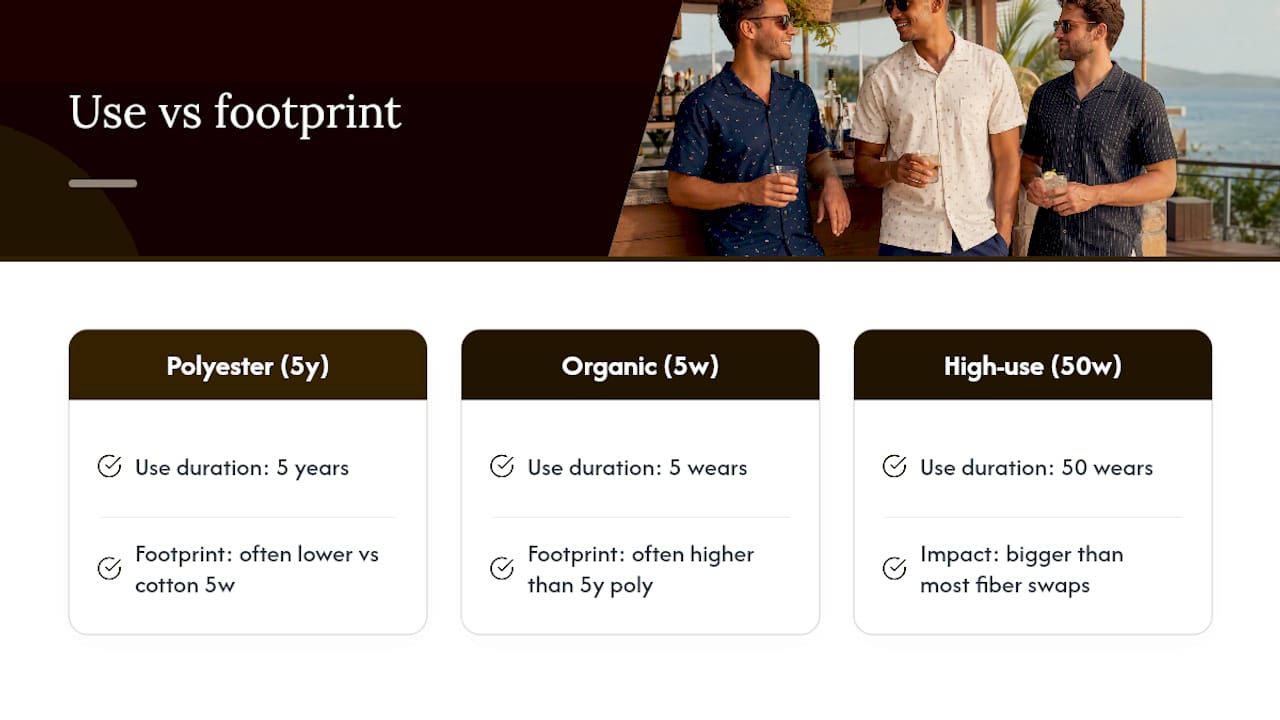
That’s why the intention-behavior gap matters so much here. Research on the green gap shows plenty of shoppers say they want sustainable options, then buy the cheap version anyway because price and access win in the moment. Telling people to “just buy sustainable” without addressing cost is advice that sounds good and changes nothing.
What actually works: buy less often, choose construction that survives repeat washing, and repair before replacing. Material certifications like GOTS help you avoid the worst offenders, but they’re a filter, not a finish line. The habit of wearing something 50 times instead of 5 does more for the planet than almost any single fiber swap.
- Dan Flashes
Get a Shirt Built for Cost-Per-Wear, Not the Trend Cycle
A shirt you wear 50 times costs a fraction, per wear, of one you wear five times before it falls apart. That’s the entire logic behind Danflashes’ approach: cotton and bamboo hemp construction meant to survive real wear, at prices that don’t require a trend-fashion budget to justify.

Right now, the Buy 3 Get 1 Free bundle makes it easy to build a small rotation of pieces instead of one impulse buy, and every order carries a 30-Day Refunds if the fit or fabric isn’t right. Browse the Hawaiian pattern shirt in breathable cotton, the tropical Hawaiian pattern shirt for bolder prints, or the premium beach shirt if you want a heavier weight built for years of wear. If you’d rather see the full lineup at once, the men’s patterned shirts collection is the fastest way to compare styles before you buy.
Sources
- Earth
- Rethinking our shopping habits: It’s better for the planet and your wallet (PBA, UMich)
- Ready to give up fast fashion? Give ‘slow fashion’ a try. | National Geographic


