

The best breathable natural fabrics are linen, cotton, and hemp, with lightweight TENCEL lyocell and featherweight silk as strong runners-up. All three top picks share hollow or irregular fiber structures paired with open, loose weaves that let air move through the cloth instead of trapping it against your skin. Humidity, how hard you’re sweating, and how the garment actually fits will still shift which one wins on a given day.
TL;DR:
- Linen, cotton, and hemp are the top breathable natural fabrics, with fiber structure and open weaves being critical factors for airflow.
- Fabric weight, weave openness, and finishing treatments significantly influence breathability, making light, loosely woven fabrics preferable.
- Fit and construction, such as loose cuts and ventilation features, enhance airflow and prevent heat trapping, while dense seams or linings can reduce breathability.
- In humid environments, natural fibers’ moisture absorption becomes a liability, and technical blends or synthetics may provide better moisture wicking.
- Certifications like GOTS or Oeko-Tex help ensure lower chemical impact, but fabric openness and weight remain the primary indicators of breathability.
Table of Contents
- What Makes Breathable Natural Fabrics Actually Breathable
- Comparing Linen, Cotton, Hemp, Silk, and TENCEL Lyocell
- How Fit and Construction Change Airflow
- When Natural Fibers Aren’t the Right Call
- Sustainability and Safety Cues Worth Checking
- Choosing Breathable Fabrics by Activity and Climate
- Caring for Breathable Natural Fabrics So They Last
- Common Misconceptions About Breathable Natural Fabrics
- How Humidity and Climate Change What Actually Works
- Layering Natural Fabrics Without Losing Airflow
- Dan Flashes’ Perspective: Choosing Fabrics for Shirts People Actually Wear All Day
- Shirts Built Around These Fabric Principles
- Sources
What Makes Breathable Natural Fabrics Actually Breathable
Fiber shape does most of the work before a garment is even sewn. Linen fibers are hollow and rigid, which creates tiny air channels along their length. Cotton fibers are flat and twisted, with a natural capillary action that pulls moisture away from skin and spreads it across a wider surface where it can evaporate. Both fibers are hydrophilic, meaning they absorb water into the fiber itself rather than pushing it to the surface the way synthetic wicking fabrics do.
Weave and knit matter just as much as the raw fiber. A tight satin weave can make even 100% cotton feel stuffy, while a loose, open weave in a heavier fiber can still move air well. Fabric weight compounds the effect: lighter grams per square meter generally means more open space between yarns for airflow. And finishing treatments (permanent-press coatings, heavy sizing, water-repellent sprays) can quietly kill breathability that the raw fiber promised, which is why a fabric’s origin story doesn’t guarantee how it performs on the rack.
A few checks work reliably before you buy anything:
- Hold the fabric up to a light source. If you can’t see any light through it, airflow is limited.
- Pinch and stretch the weave slightly. Visible gaps between yarns are a good sign.
- Check the label for weight in grams per square meter or ounces per yard. Lower numbers usually mean cooler wear.
- Scrunch the fabric in your hand. Natural fibers with minimal finishing wrinkle easily; heavily treated fabrics tend to resist wrinkling and trap more heat.
Pro Tip: Skip the marketing copy and do the light test in-store. A shirt labeled “breathable” with a dense, opaque weave is marketing language, not a fiber property.
Comparing Linen, Cotton, Hemp, Silk, and TENCEL Lyocell
Choosing among the best natural fabrics for summer comes down to matching fiber behavior to your climate and activity level, not chasing whichever fabric has the trendiest label this year.
-
Linen. Linen wins for sustained heat. Its hollow fibers allow constant airflow, and it can absorb up to around 20% of its weight in moisture before it feels damp, drying fast once it does. It performs especially well above about 77°F (25°C), and in lab comparisons it can test several degrees cooler against skin than polyester under similar conditions. The tradeoff is wrinkling. Linen creases the moment you sit down, and its hand can feel a little rougher than cotton until it softens with washing. Explore Dan Flashes’ linen fabric shirts if you want that cooling effect without hunting for the right weight yourself.
-
Cotton. Cotton is the most versatile pick on this list, but not all cotton behaves the same. Tight weaves like standard broadcloth trap heat, while open-weave varieties like voile, chambray, muslin, and seersucker breathe far better and remain genuinely practical for daily wear. It absorbs moisture well but dries slower than linen, so it can feel damp longer during heavy sweating. For most warm-weather situations that don’t involve extreme heat, an open-weave cotton shirt is the easiest, lowest-maintenance choice.
-
Hemp. Hemp shares linen’s hollow-fiber structure and airflow benefits, but it holds up to repeated washing and rough use noticeably better, and it resists UV degradation over time. It softens with wear the way linen does, just on a slightly slower timeline. For someone who wants one warm-weather shirt to last years rather than seasons, hemp is often the smarter long-term buy. Dan Flashes’ side-by-side breakdown of hemp vs linen shirts walks through exactly where the two diverge.
-
Silk. Featherweight silks like habotai or chiffon are surprisingly breathable and feel cool against skin for evening wear or dressy occasions. However, heavier silk weaves trap heat because the density that gives silk its structure also blocks airflow. Silk is a specialty choice, not an everyday warm-weather fabric.
-
TENCEL lyocell and bamboo viscose. These regenerated cellulose fibers split the difference between natural and synthetic. TENCEL lyocell in particular has high moisture uptake and a soft, almost liquid drape, and Lenzing’s production process claims closed-loop solvent recovery with a lower environmental footprint than generic lyocell. Bamboo viscose has a similarly soft feel and works well for sleepwear and linings, though its sustainability varies quite a bit depending on how the manufacturer processes it, so the “bamboo” label alone tells you less than you’d expect.
How Fit and Construction Change Airflow
The best fiber on paper still fails you if the garment is cut wrong. A loose, flowy cut lets air circulate around your body instead of pressing fabric against sweaty skin, which is why relaxed-fit shirts consistently feel cooler than fitted ones made from identical cloth. Side vents at the hem add extra airflow at the exact spot where heat builds up.
Watch for construction details that quietly cancel out a breathable fiber:
- Heavy interfacing or shoulder pads block airflow across the upper back and chest.
- Full linings, even in a lightweight shirt, trap a layer of still air against skin.
- Dense seam tape or bound seams reduce the open weave’s benefit right where they’re placed.
If you need more durability than 100% natural fiber offers (think travel shirts that survive suitcase compression), a blend with a small percentage of synthetic fiber woven into a natural face fabric can hold shape better without sacrificing much airflow.
When Natural Fibers Aren’t the Right Call
Natural fibers are hydrophilic, meaning they absorb moisture directly into the fiber rather than pushing it to the surface. That’s great for perceived dryness in normal conditions, but in very humid air, evaporation slows down and the fabric can saturate, leaving it heavy and clingy instead of cool.
A few situations call for something other than pure natural fiber:
- Endurance exercise or anything involving sustained heavy sweating, where moisture-wicking polyester or nylon actively pulls sweat to the surface for faster evaporation.
- High-humidity climates where natural fibers stay damp longer because the surrounding air can’t absorb much more moisture itself.
- Situations demanding odor control over multiple wears, where synthetic wicking fabrics often outperform naturals.
- Quick-turnaround travel, where a synthetic or blended fabric dries overnight in a hotel sink faster than cotton will.
A natural-face, technical-backing blend (a cotton or linen exterior with a small synthetic component) can capture most of the comfort of natural fiber while adding some of that moisture management. Polyester vs natural fibers breaks down exactly where that tradeoff makes sense.
Sustainability and Safety Cues Worth Checking
Not every “natural” fabric is automatically clean or low-impact. Growing and processing methods vary enormously, and finishing chemicals can undo a lot of the environmental benefit that raw cotton or hemp starts with.
Two certifications do most of the heavy lifting here. GOTS and Oeko-Tex both set limits on pesticide use and chemical finishing, which matters both for the planet and for what’s sitting against your skin all day. Lenzing’s TENCEL branding leans on a similar idea, pointing to closed-loop solvent recovery as a differentiator from generic lyocell production.
A short checklist before you buy:
- Look for GOTS or Oeko-Tex labeling on organic cotton clothing or linen if certification matters to you.
- Ask (or check the product page) what finishing process was used. Heavy synthetic coatings usually mean reduced breathability, too.
- Prewashed or stone-washed fabrics tend to have already shed excess sizing and loose dye, which usually means a softer, more breathable hand right out of the box.
Choosing Breathable Fabrics by Activity and Climate
Matching fabric to the actual day ahead of you beats defaulting to whatever’s already in your closet.
- Hot and humid, low exertion. Open-weave cotton, cotton-linen blends, or lightweight hemp handle sticky air better than pure linen, since the slight extra structure resists clinging when linen would go limp with moisture.
- Active or heavy sweating. Lean toward a technical blend or a quick-dry synthetic for the activity itself, and save pure natural fiber for before and after.
- Travel. Hemp or a cotton-linen blend tolerates suitcase creasing better than pure linen while still breathing well on arrival.
- Office or business-casual settings. Open-weave cotton in a structured cut gives you coverage and a tidy look without sacrificing airflow the way heavier broadcloth does.
- Sleepwear. Bamboo viscose or lightweight silk feel cool and soft against skin overnight.
- Evening events. Featherweight silk earns its keep here, where comfort matters less than drape and shine.
For sun protection, remember there’s a genuine tradeoff: looser weaves let more air through but also let more UV through, so a tighter weave or darker color is the better call for a long day outdoors, even if it costs you a little breathability.
Pro Tip: Layer a lightweight, tightly woven cotton undershirt beneath an open-weave linen shirt for beach days. You get sun coverage from the base layer and airflow from the outer layer instead of picking one or the other.
Caring for Breathable Natural Fabrics So They Last
How you wash a fabric affects how breathable it stays over time, not just how long it lasts. Linen and silk both do best in cold water on a delicate or gentle cycle, since high heat weakens fibers and speeds up wear. Cotton and hemp tolerate warmer water and more agitation, but frequent high-heat drying still shortens their lifespan and can shrink the open weave that made them breathable in the first place.
Quick guidelines:
- Air-dry linen and silk when possible; tumble dry on low if you’re in a hurry, but pull items out while still slightly damp.
- Use mild detergent without added fabric softener, which can coat fibers and reduce their natural absorbency.
- Treat stains promptly with a gentle pretreatment rather than reaching for harsh chemical removers that can strip natural finishes.
- Store linen and hemp loosely folded or hung, since tight, humid storage encourages mildew in absorbent fibers.
Common Misconceptions About Breathable Natural Fabrics
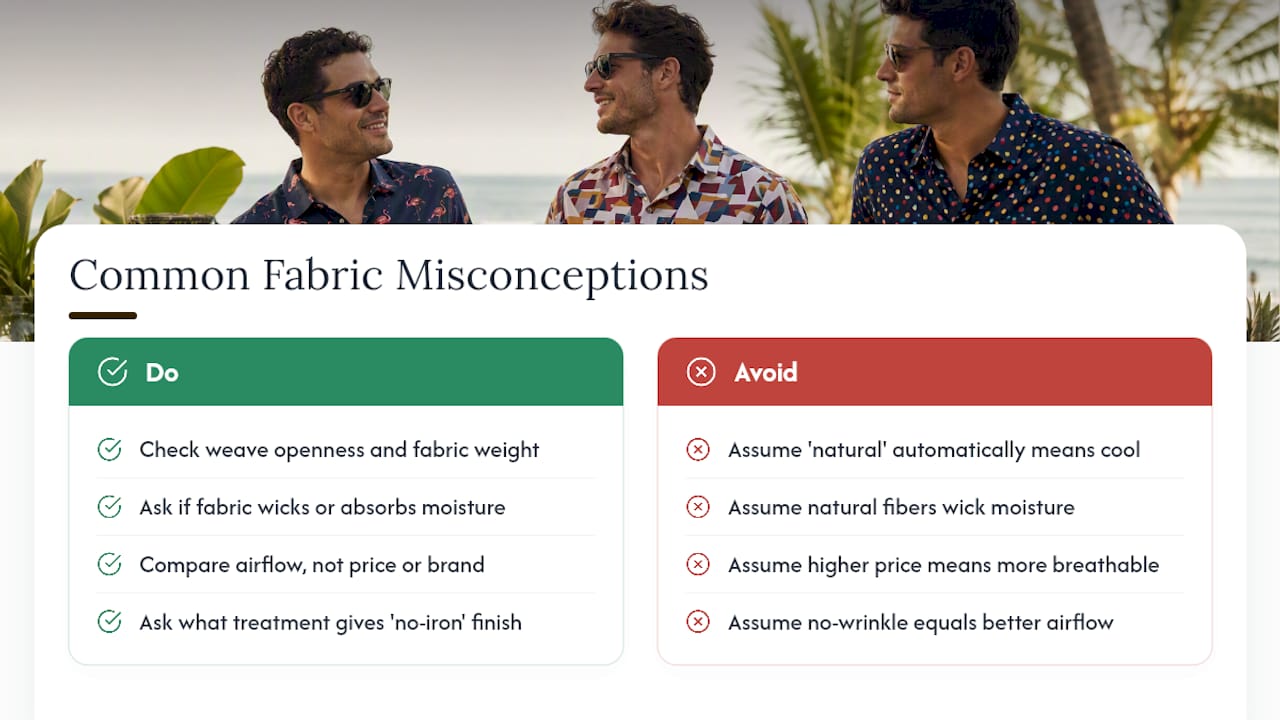
The biggest myth is that “natural” automatically means “cool.” A heavy, tightly woven raw silk or a dense cotton canvas is natural fiber through and through, and neither breathes particularly well. Fiber origin matters less than weave openness and fabric weight.
Another common mix-up: people assume moisture-wicking is what natural fibers do. It isn’t. Wicking pushes moisture to the fabric’s surface for evaporation, which is how synthetics work. Natural fibers instead absorb moisture into the fiber structure itself, a hydrophilic process that feels different on skin and behaves differently in humid air.
Plenty of shoppers also assume expensive automatically means more breathable. Price often tracks weave complexity, brand, or origin story rather than actual airflow. A basic open-weave cotton voile can outperform a costly heavyweight designer cotton shirt on a genuinely hot day, dollar for dollar and degree for degree.
Last one worth flagging: wrinkles don’t equal quality, and smoothness doesn’t equal breathability. Linen wrinkles because it’s minimally processed, not because it’s poorly made. A wrinkle-resistant fabric often got that way through a chemical finish that also reduces how well air moves through it. If a shirt promises “no-iron” convenience, ask what treatment made that possible.
How Humidity and Climate Change What Actually Works
Fiber performance isn’t fixed. It shifts with the air around it. In dry heat, natural fibers excel because sweat evaporates quickly off (or through) hydrophilic fabric, creating a cooling effect as moisture turns to vapor. Linen in Arizona in July and linen in coastal Georgia in July are two very different experiences with the same shirt.
High humidity slows evaporation across the board, and that’s where hydrophilic natural fibers hit their limit. Once a fiber absorbs moisture faster than it can release it into already-saturated air, the fabric stays damp and can feel heavier and clingier than a synthetic wicking alternative would in the same conditions.
Elevation and airflow around you matter too. A breezy coastal town lets even a moderately breathable fabric perform well, since ambient air movement does some of the work the fabric alone would otherwise need to handle. A still, humid inland afternoon asks more of the fabric itself, which is when open-weave cotton or a cotton-linen blend often edges out pure linen. Linen’s high moisture capacity becomes less of an advantage when the surrounding air has nowhere to send that moisture.
The practical takeaway: pack for the specific climate, not a general idea of “summer fabric.” A shirt that performed beautifully on a dry mountain trip can feel noticeably different on a humid coastal one, even at the same temperature reading.
Layering Natural Fabrics Without Losing Airflow
Layering feels counterintuitive for warm weather, but done right, it can add sun protection or style without sacrificing much comfort. The key is keeping every layer breathable rather than adding a single heavy piece on top of a light one.
A lightweight cotton undershirt beneath an open-weave linen or hemp shirt adds a layer between skin and sun without meaningfully blocking airflow, since both layers stay loose and open. The same logic applies to sleeve layering: a rolled long-sleeve linen shirt over a short-sleeve cotton tee gives you sun coverage you can adjust throughout the day, unlike a single mid-weight piece you’re stuck wearing.
Where layering goes wrong is mixing weights or tightness. Stacking a dense woven layer under a breathable outer piece cancels out most of the benefit, since heat gets trapped between the layers regardless of how open the outer fabric is. The rule of thumb: every layer in a warm-weather stack should be able to pass the light test on its own. If one layer fails it, the whole combination will feel hotter than the outer fabric alone suggests.
Dan Flashes’ Perspective: Choosing Fabrics for Shirts People Actually Wear All Day
We build our shirts around cotton, linen, and sustainable bamboo hemp for the same reasons outlined throughout this guide: fiber structure and weave openness matter more than marketing claims. Every design decision starts with whether the fabric performs when someone’s actually wearing it in real heat, not just how it photographs on a hanger.
Our linen fabric shirts lean into linen’s natural cooling properties, while our cotton and linen blend pieces balance that airflow against linen’s tendency to wrinkle. For anyone weighing hemp against linen for long-term durability, our hemp vs linen comparison lays out exactly where each fiber earns its keep.
- Dan Flashes
Shirts Built Around These Fabric Principles
If the fiber and weave breakdown above left you wanting something to actually wear, three of our shirts put these exact principles into practice.
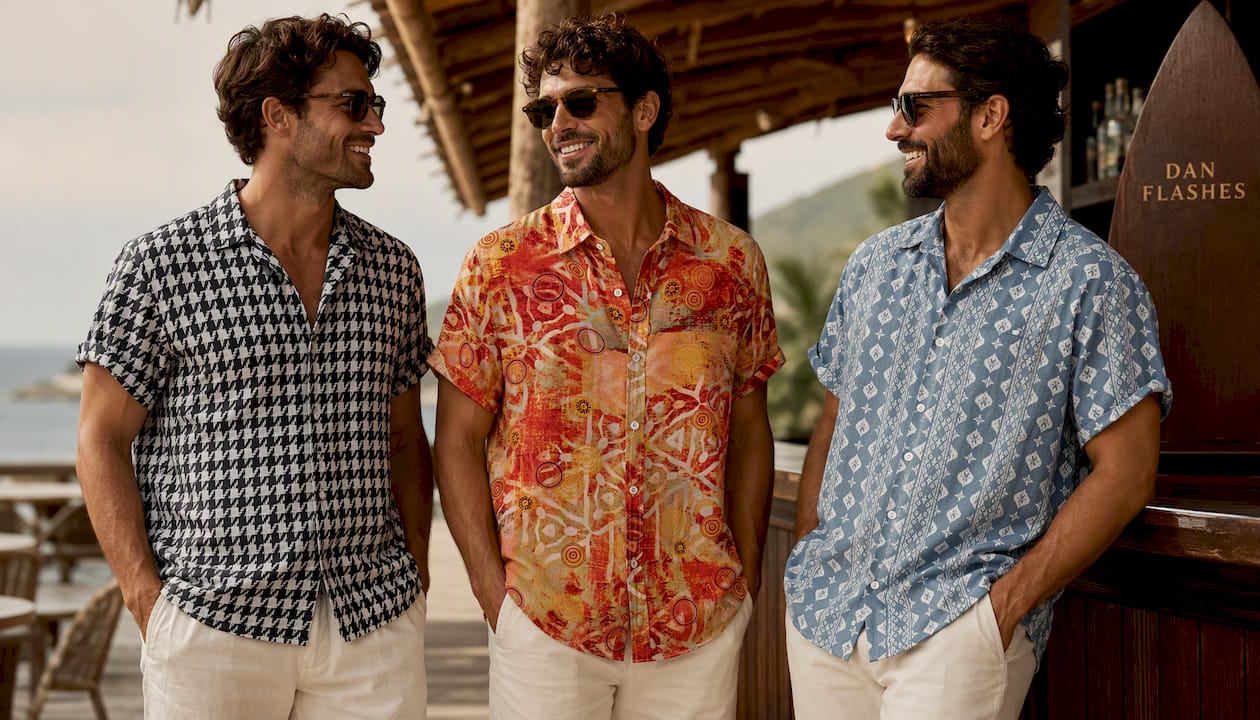
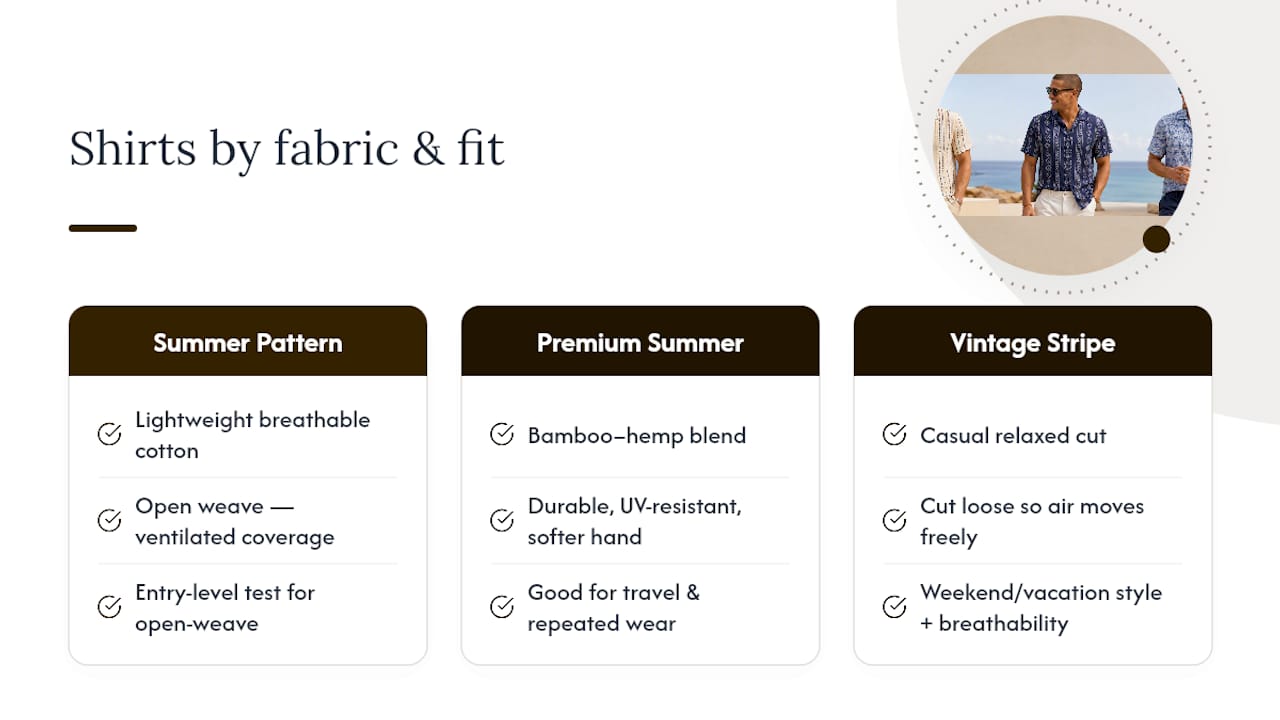
The Summer Pattern Shirt uses a lightweight, breathable cotton base in an open weave, built for warm-weather days where you need coverage without the heat trap. It’s the easiest entry point if you’re testing whether open-weave cotton fits your climate before committing to a wardrobe overhaul. Check it out on the Summer Pattern Shirt product page.
The Premium Summer Pattern Shirt steps up to a bamboo hemp blend, which gives you hemp’s durability and UV resistance with a noticeably softer hand than raw hemp alone. It suits travel and repeated wear better than a pure cotton option, and it’s the pick if you want one shirt that holds up across an entire season. Take a look at the Premium Summer Pattern Shirt.
The Vintage Stripe Summer Shirt brings a casual, relaxed cut into the mix, cut loose through the body so air moves the way this guide’s fit section describes, rather than pressing fabric against skin. It’s the easy weekend or vacation choice when style matters as much as raw breathability. Browse the Vintage Stripe Summer Shirt.
Some orders come with bundle discounts and money-back guarantees, so you can test a fabric against your own climate and activity level before deciding it’s the one you’ll wear all summer.
Sources
- Best Lightweight Fabrics for Hot Weather: A Global Guide (2026)
- Why Natural Fabrics Are Essential For Summer Dressing - The Good Trade
- What fibres and fabrics to wear in summer - ABC News
- Textile Exchange


