

Modal generally wins for next-to-skin summer comfort because it absorbs and releases moisture more efficiently than cotton, creating a drier feel against your skin. Cotton fights back with better durability and much higher wash-temperature tolerance, so it survives heavy laundry rotations that would wear modal down faster. Neither answer holds up on its own, though. A loose, lightweight cotton shirt can easily out-cool a dense modal knit, because fabric weight and construction often matter more than fiber identity alone.
TL;DR:
- Modal absorbs moisture more efficiently than cotton and generally feels softer and drapes closer to the skin, making it more comfortable in humid conditions.
- Cotton’s durability, resistance to pilling, and ability to withstand hot washes make it better suited for frequent, rugged laundering and long-term wear.
- Fabric weight and weave construction influence breathability and heat retention more than fiber content, meaning lightweight cotton or linen can outperform dense modal in hot weather.
- Modal requires cooler washing and gentle drying to prevent pilling or thinning, whereas cotton tolerates hotter water and higher heat drying.
- The choice depends on garment use; modal excels for comfort and softness in sleepwear and casual wear, while cotton is ideal for structured, high-wash garments needing durability.
Table of Contents
- Modal vs Cotton Summer Comparison: Softness, Moisture, and Care
- Why Modal and Cotton Feel So Different on Skin
- Predicting How a Garment Will Actually Dry
- Reading Care Labels: Matching Fabric to Your Laundry Habits
- Matching Fabric to Your Summer Situation
- Our Take on Fabric Choices for Summer Shirts
- Summer Shirts Built Around These Fabric Trade-Offs
- Sources
- FAQ
Modal vs Cotton Summer Comparison: Softness, Moisture, and Care
Choosing between these two fibers comes down to how you plan to wear and wash the garment, not just how it feels on the hanger. Modal has a genuinely different hand than cotton. It drapes with a silky, almost liquid softness that cotton can’t match unless it’s a high-end combed or Pima weave, and that softness tends to survive dozens of washes better than people expect.
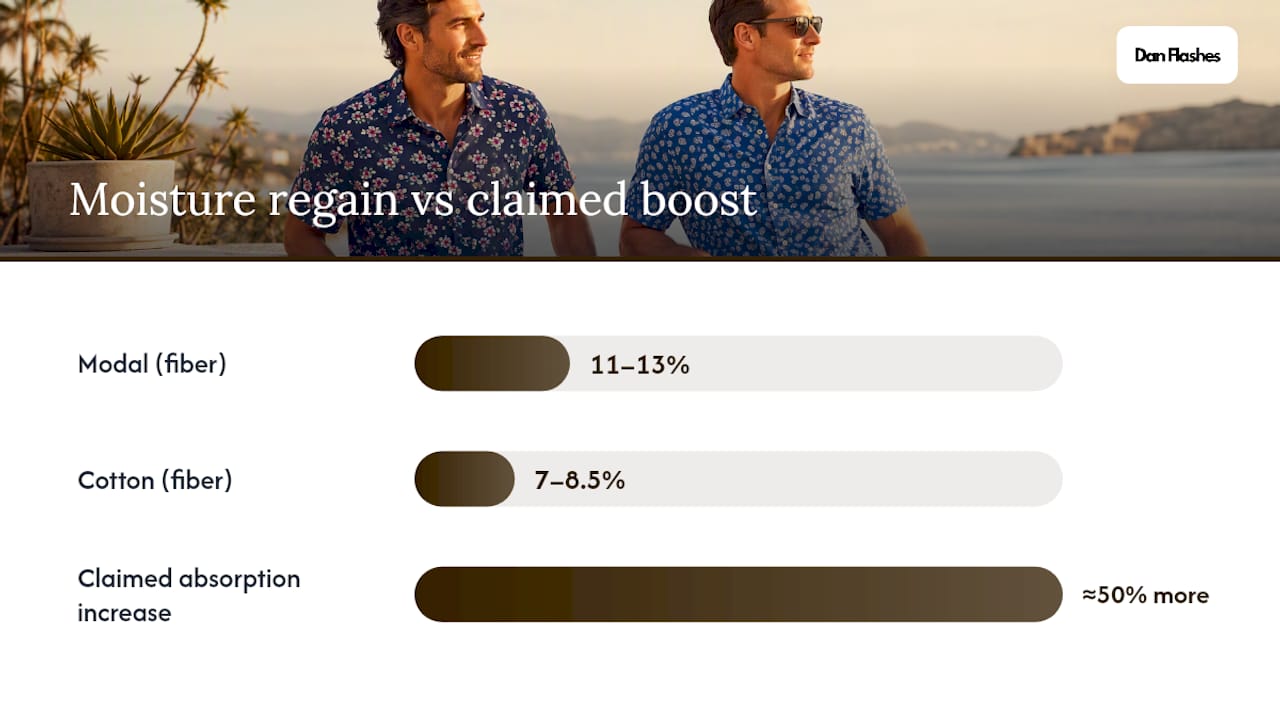
Moisture behavior is where the fabrics really diverge. At the fiber level, modal holds an equilibrium moisture regain around 11 to 13%, compared to cotton’s 7 to 8.5%, according to a fiber-level comparison from NatuClothes. That gap is the source of the common marketing claim that modal absorbs roughly 50% more moisture than cotton. What that number doesn’t tell you is how fast the fabric dries afterward, which depends far more on knit density and thickness than on the fiber itself.
Breathability follows the same logic. A tightly knit, high-GSM modal fabric can trap more heat than a lightweight cotton percale, because air permeability is largely a construction property, not a fiber property. Check the weight and weave before you check the fiber content tag.
Here’s how the two stack up across the factors that actually affect a summer purchase:
- Softness and hand: Modal feels smoother and drapes closer to the body; cotton feels crisper unless it’s a fine combed weave.
- Moisture regain: Modal (11 to 13%) outpaces cotton (7 to 8.5%) at the fiber level, though drying speed depends on the fabric, not just the fiber.
- Breathability: Loose knits and lower GSM win regardless of fiber; a heavy modal jersey can run warmer than a light cotton weave.
- Care and washing: Cotton tolerates hot water and tumble drying; modal generally needs cooler washes and gentler drying.
- Durability: Cotton resists pilling and abrasion better over time; modal can pill or thin out faster under rough handling.
- Price: Cotton usually costs less at retail; modal commands a premium tied to its softer feel and production process.
Why Modal and Cotton Feel So Different on Skin
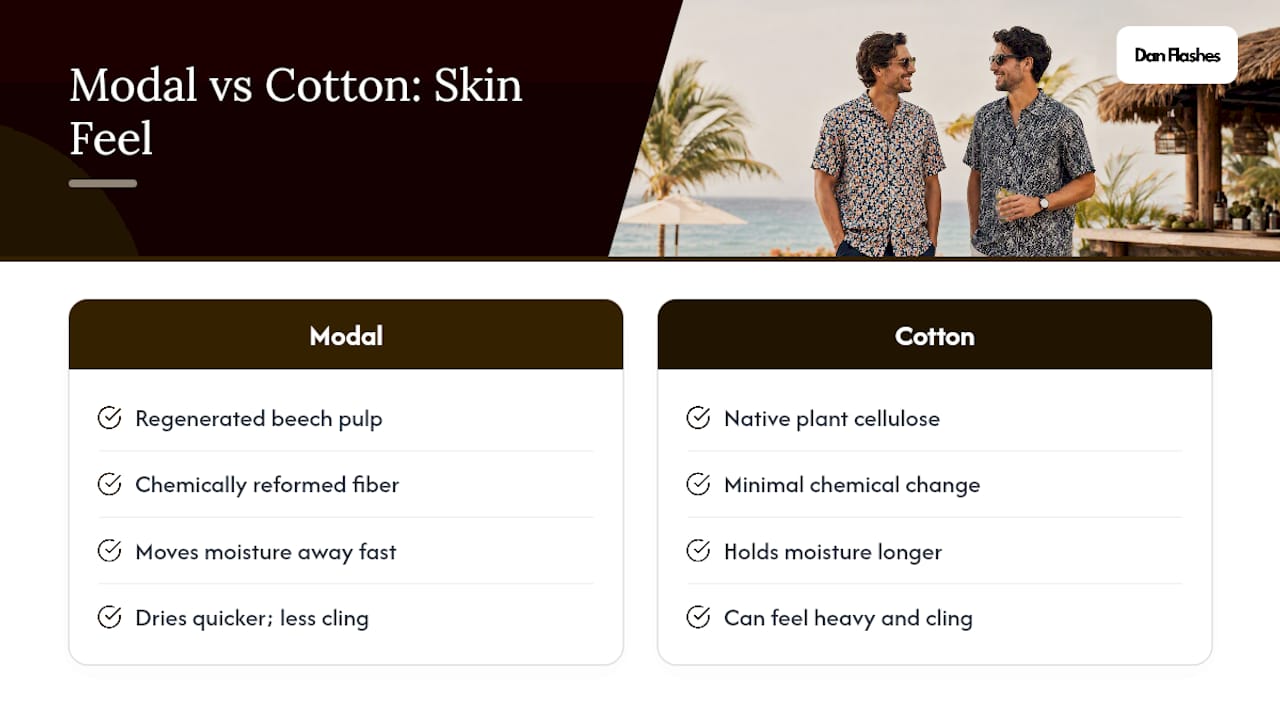
The difference starts at the molecular level. Cotton is native cellulose, harvested directly from the plant boll and spun with minimal chemical alteration. Modal is regenerated cellulose, made by dissolving wood pulp (usually beech) and reforming it into fiber, a process pioneered commercially by Lenzing under the TENCEL™ Modal name.
That regeneration process is exactly why modal can absorb and release moisture so efficiently. According to Lenzing’s own technical specifications, modal fibers support a drier microclimate at the skin because they move moisture vapor away from the body faster than raw cotton fibers typically do. Cotton’s native fiber structure works fine, but it holds onto moisture longer once saturated, which is why a soaked cotton tee can feel heavier and clingier than a soaked modal one.
Fiber science only tells half the story, though. Garment weight, knit density, and finishing treatments decide how that fiber performs once it’s sewn into a shirt. A 180 GSM cotton jersey tee breathes completely differently than a 220 GSM cotton twill button-up, even though both are “100% cotton.” The same swing applies to modal: a loosely knit modal undershirt feels airy, while a dense modal-spandex blend used in fitted activewear traps heat against the skin.
This is why fiber content alone is an unreliable shortcut. Two shirts labeled identically can perform in opposite ways depending on how tightly they’re woven and how much fabric sits between your skin and the outside air. A look at texture and finish in summer shirts makes this clearer: the weave often does more work than the fiber name printed on the tag.
Predicting How a Garment Will Actually Dry
Fiber absorption and fabric drying speed are not the same thing, and mixing them up is the most common mistake shoppers make. A fiber’s moisture regain tells you how much water weight it can hold at equilibrium. It says nothing about how quickly that moisture evaporates off the surface once you’re sweating through a humid afternoon. A dense modal shirt can technically absorb more moisture than a thin cotton one and still feel damp against your back for longer, simply because there’s more fabric mass holding onto that moisture and less surface area exposed to air.
Blends complicate things further. Adding elastane or polyester to either fiber changes how moisture moves through the fabric, sometimes speeding up evaporation and sometimes just adding stretch without helping dry time at all. Finishes matter too. A mechanical or chemical treatment applied during manufacturing can make an ordinary cotton fabric wick faster than an untreated one.
A few habits reduce damp, clingy fabric no matter which fiber you’re wearing:
- Wash in cool or warm water rather than hot, which preserves fiber structure and finish longer.
- Skip high-heat tumble drying when possible; line-dry or use a low-heat setting instead.
- Avoid fabric softener buildup, which can coat fibers and reduce their natural moisture movement.
- Check the fabric weight (GSM) on the product page, not just the fiber name, before buying.
Pro Tip: If a product page lists “moisture-wicking” without a GSM number, look for the weave description instead. Words like “gauze,” “poplin,” or “lightweight jersey” usually signal a more breathable cut than “brushed” or “heavyweight,” regardless of whether it’s modal or cotton.
Reading Care Labels: Matching Fabric to Your Laundry Habits
Cotton tolerates far more abuse in the wash than modal does. You can run cotton through hot water and a tumble dryer on medium heat for years and it holds up. Modal prefers cooler water and air drying or low-heat tumbling, because higher heat accelerates fiber breakdown and increases pilling risk over time.
Shrinkage is where the gap shows up fastest. Untreated cotton can shrink noticeably in its first hot wash, while modal blended and finished properly tends to hold its shape better after the first cycle, though it’s more sensitive to heat damage afterward if you ignore the label.
Those instructions on the tag aren’t arbitrary. The FTC’s care-labeling rules require manufacturers to disclose accurate washing and drying temperature categories, along with truthful fiber-content percentages, so the label is a legally required guide rather than a suggestion.
Before you build a laundry routine around a new shirt:
- Check the max wash temperature on the label and set your machine accordingly.
- Skip bleach on modal entirely; it degrades the fiber faster than cotton.
- Air dry or use low heat for anything blended with modal or spandex.
- Wash similar fabrics together to avoid uneven wear from friction.
Matching Fabric to Your Summer Situation
- Everyday undershirts and sleepwear. Modal usually wins here. Its softness and moisture buffering make it comfortable against skin for hours, especially in hot bedrooms or under other layers.
- Structured button-ups and shirts you’ll wash constantly. Cotton or cotton blends make more sense. They handle frequent hot washes and daily wear without breaking down as fast.
- Underwear and activewear. Prioritize blends built for wicking over pure fiber claims. Look at construction and fit as closely as fiber content.
- Travel and humid climates. Favor lightweight, loosely woven fabrics regardless of fiber. A lightweight summer shirt built for easy packing often beats a heavier modal piece for actual comfort in the heat, and a breathable cotton or linen blend can dry faster between wears on the road.
Our Take on Fabric Choices for Summer Shirts
Most fabric debates skip the part that matters most: construction beats fiber identity more often than shoppers assume. A shirt’s weight, weave, and fit determine how it feels in July heat far more reliably than whether the tag says modal or cotton. That’s the lens Danflashes uses when building summer shirts, whether the piece is a breezy cotton print or a softer, sustainable bamboo hemp blend suited to a different kind of summer day.
The overlooked nuance is that “breathable” claims on a hangtag are only half true without knowing the GSM and knit behind them. Cotton earns its reputation for durability honestly. It survives hot washes, resists pilling, and forgives sloppy laundry habits, which matters if you’re the kind of person who tosses shirts in with everything else. Modal earns its reputation for softness just as honestly, but it asks for a little more care in return.
The brand builds its shirt lines around that trade-off rather than pretending one fiber wins every category, backing every purchase with a 30-day money-back guarantee so getting the fit and feel wrong doesn’t cost you anything but the return shipping.
- Dan Flashes
Summer Shirts Built Around These Fabric Trade-Offs
If you’ve read this far, you already know that the right fabric depends on the shirt’s job, not just its fiber label. The designs around exactly that principle, using breathable cotton and eco-conscious bamboo hemp in bold, intricate patterns instead of forcing one fabric into every style.

For beach days and casual outings where airflow matters most, the Summer Pattern Shirt uses a lightweight cotton build designed to move with you instead of clinging in the heat. If you need something structured enough for dinner out but still breathable, the Summer Button-Up Shirt fits that gap, and travelers who want a bold print without sacrificing packability should look at the Summer Pattern Button-Up Shirt. Purchases come with a 30-day money-back guarantee and a Buy 3 Get 1 Free bundle, so testing a couple of fits and fabrics costs you nothing but the return window. Browse the full Hawaiian shirt collection or head straight to checkout on the style that matches your next trip.
Sources
- TENCEL™ Modal - Experience natural comfort | Lenzing
- Care Labeling of Textile Wearing Apparel & Certain Piece Goods | Federal Trade Commission
- Lenzing Modal vs cotton (fiber-level comparison) | NatuClothes
FAQ
What Is the Downside of Modal Fabric?
Modal generally requires cooler wash temperatures and gentler drying than cotton, and it can pill or thin faster if it’s washed hot or tumble dried on high heat. It also tends to cost more at retail than comparable cotton pieces.
Is Modal a Good Fabric for Hot Weather?
Modal often performs well in heat because it absorbs and releases moisture efficiently, supporting a drier feel at the skin. That said, a densely knit modal piece can still run warmer than a lightweight, loosely woven cotton or linen garment, so construction matters as much as fiber choice.
Is Modal Better for You Than Cotton?
Neither fiber is universally better; modal tends to feel softer and manage moisture more efficiently, while cotton offers stronger durability and easier care. The right pick depends on whether you value next-to-skin softness or low-maintenance washing more.
What Is the Coolest, Most Breathable Fabric?
Lightweight, loosely woven fabrics like linen or cotton percale often feel cooler than dense modal knits in humid heat, according to reporting on fabric performance in summer conditions. Fiber identity matters less here than fabric weight and weave openness.

