

Brush off any dry salt crystals first, then pretreat the mark with diluted white vinegar or a dab of mild detergent before laundering according to the care label. This combination effectively treats most salt and sweat stains on washable cotton or linen shirts. If the tag says “dry clean only” or the fabric shows any sign of color change when you test it, stop treating it yourself and take it to a professional cleaner instead.
TL;DR:
- Salt stains respond well to pretreatment with vinegar and water, followed by blotting and thorough warm-water washing, especially on cotton and linen fabrics.
- Avoid home treatments on delicate or dry-clean-only fabrics, and always test solutions on a hidden seam to prevent discoloration or damage.
- Address fresh salt stains within 24 hours for the best chance of removal using simple household items like vinegar, mild detergent, or baking soda.
- Do not rely on dry cleaning alone for old or set-in salt stains, and communicate the stain’s history clearly to professional cleaners.
- Properly brushing off crystals before wetting and air-drying before applying heat greatly reduces the risk of permanent staining or fabric damage.
Table of Contents
- Step-by-Step Salt Stain Removal for Washable Shirts
- Which Fabrics Need Extra Caution?
- Household Recipes That Actually Work on Salt Stains
- When Should You Take a Shirt to a Dry Cleaner?
- Dan Flashes’ Everyday Tips for Protecting Prints and Fibers
- Our Take: Speed Beats Any Fancy Product
- Shirts That Hold Up Well to Regular Washing
- Sources
Step-by-Step Salt Stain Removal for Washable Shirts
Salt stains look stubborn, but on a cotton or linen shirt they respond well to a short, methodical process. Rushing straight to the washing machine without pretreatment is the most common reason a mark comes back after drying.
1. Let the fabric dry, then brush off the crystals. Wet salt smears; dry salt brushes away. Practitioners recommend clearing loose crystals before applying any liquid, because wetting the area first can push crystals deeper into the fibers and set the stain rather than lift it. A soft clothes brush or even the edge of a dry towel works.
2. Mix your pretreat solution. For most salt and sweat marks, combine one part white vinegar with one to two parts water, or use 1 cup of warm water with 1 tablespoon of white vinegar. If you’d rather skip vinegar’s smell, a few drops of mild liquid detergent stirred into warm water works nearly as well on sweat-based residue. Apply either mix directly to the stain and let it sit for 10 to 30 minutes depending on how heavy the residue looks.
3. Blot, don’t rub. Press a clean white cloth against the treated spot to lift the loosened salt. Rubbing spreads the stain and can push it into surrounding fibers. Rinse the cloth and repeat until no more residue transfers.
4. Wash on the warmest safe setting. Check the care label, then launder at the warmest temperature it allows. Add an extra rinse cycle if your machine offers one. That second rinse matters more than people realize: it flushes out dissolved salt that a single cycle can leave behind in the weave.
5. Air-dry before you reach for the dryer. Skip the heat until you’ve confirmed the stain is gone. Heat can bake any leftover salt residue into the fabric, making a second treatment far harder. If a faint mark remains after air-drying, repeat the vinegar or detergent pretreatment before washing again.
Pro Tip: Keep a small spray bottle of diluted vinegar in your laundry area during humid or salty months. Treating a fresh mark within an hour beats scrubbing at a set-in stain three days later.
Which Fabrics Need Extra Caution?
Cotton and linen tolerate the vinegar-and-wash routine well. Wool, silk, leather, and anything labeled “dry clean only” are a different story. Wool and silk fibers weaken under heat and agitation, and dye can bleed or shift when you apply liquid unevenly, so a full home treatment risks permanent discoloration on those materials. The safer move on delicates is a minimal-moisture spot test on a hidden seam, and if you see any color change, hand the shirt to a professional instead of pushing further.
Leather and suede trims need surface cleaning only, never a vinegar soak, since moisture can warp or stiffen the material.
A few firm rules apply across every fragile fabric:
- Never use bleach on colored or delicate shirts, even diluted.
- Skip the dryer’s heat setting until the stain is fully gone.
- Don’t scrub aggressively. Blotting lifts salt; scrubbing grinds it in.
- Test any solution on an inside seam before treating a visible area.
Household Recipes That Actually Work on Salt Stains
You don’t need specialty stain removers for most salt marks. A handful of kitchen and bathroom staples cover nearly every scenario:
- White vinegar solution: one part vinegar to one to two parts water dissolves surface salt deposits on cotton, linen, and most synthetics. Let it sit up to 30 minutes before rinsing.
- Mild dish soap or liquid detergent: mix a few drops into warm water for stains that combine salt with body oils, like underarm sweat rings. The soap breaks down the protein and oil layer that plain vinegar can miss.
- Baking soda paste: a thick paste of baking soda and a little water lifts crusty, built-up deposits on collars and cuffs. Let it dry, then brush off before washing.
- Oxygen-based boosters: for stains that have already set, an oxygen-based (not chlorine) booster added to the wash cycle helps without the color risk that comes with bleach.
Household items reliably recommended by laundry professionals include distilled white vinegar, dish soap, plain water, and oxygen-based boosters, with a consistent warning to avoid bleach on colored fabric and to hold off on heat until the stain is confirmed gone. If you’d rather buy a commercial pretreater, look for a color-safe, oxygen-based formula rather than anything bleach-based, especially on printed or patterned shirts.
When Should You Take a Shirt to a Dry Cleaner?
Some stains are past the point where a home remedy helps. Watch for these signals:
- The fabric shows any color shift or fading during a spot test.
- The stain is old, set-in, or from road salt rather than fresh sweat.
- The garment has structured tailoring, buttons, or trim that can’t handle soaking.
- The care label explicitly says “dry clean only.”
Professional cleaners don’t rely on solvent alone. Salt doesn’t dissolve in standard dry-cleaning chemicals, so pros flush it out with controlled water or steam after testing for colorfastness. Before you drop the shirt off, skip any home soaking and just mention how the stain happened and how long it’s been there. That history helps the cleaner choose the right method the first time.
Dan Flashes’ Everyday Tips for Protecting Prints and Fibers
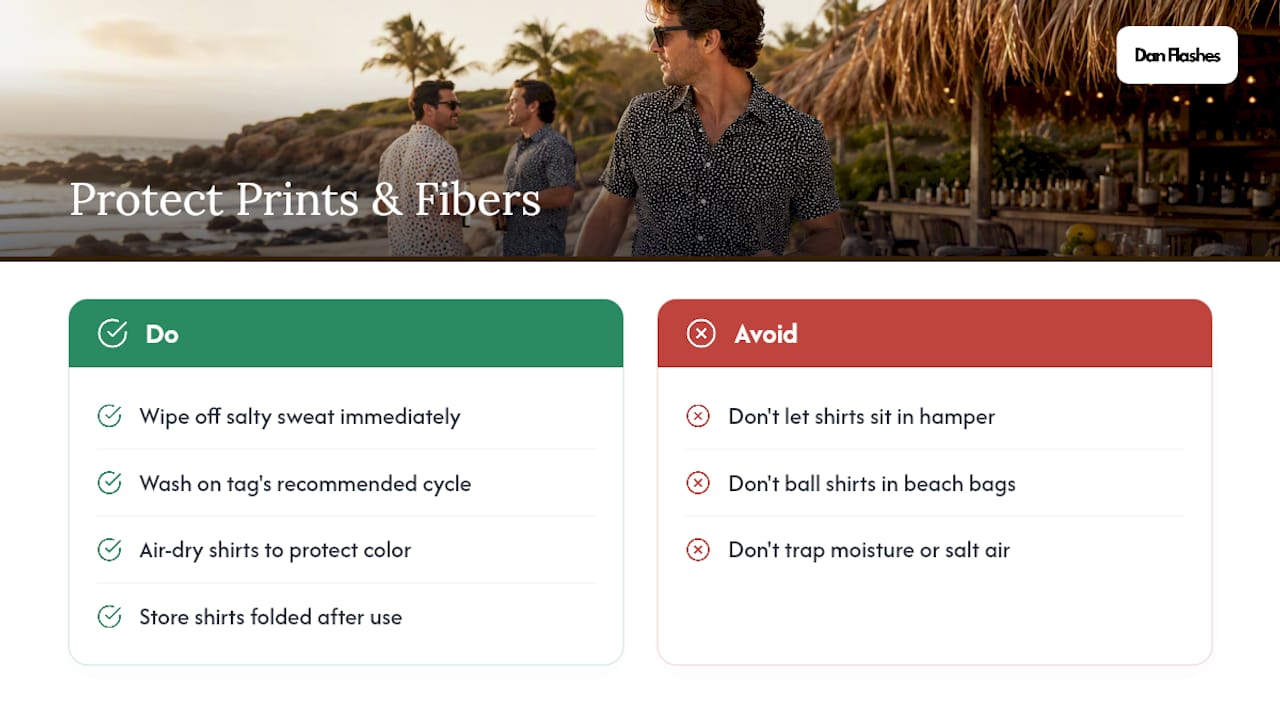
Salt stains are easier to prevent than to fix, especially on a shirt with bold, hand-drawn prints. Wipe off salty sweat as soon as you take a shirt off rather than letting it sit in a hamper for days. Wash cotton, linen, and bamboo hemp Dan Flashes shirts on the cycle recommended on the tag, then air-dry to protect the print’s color saturation. Our guide to caring for Hawaiian shirts covers wash temperatures by fabric in more depth, and our wash and wear tips are worth a look before your next beach trip.
Pro Tip: Store shirts folded rather than balled up in a beach bag. Trapped moisture and salt air speed up fading far more than a single afternoon in the sun.
Our Take: Speed Beats Any Fancy Product
The biggest myth about salt stains is that you need a specialty product to beat them. You don’t. Distilled white vinegar and a spare ten minutes solve most cases, and the research backs that up consistently. What actually separates a shirt that comes clean from one that doesn’t is timing, not the ingredient list.
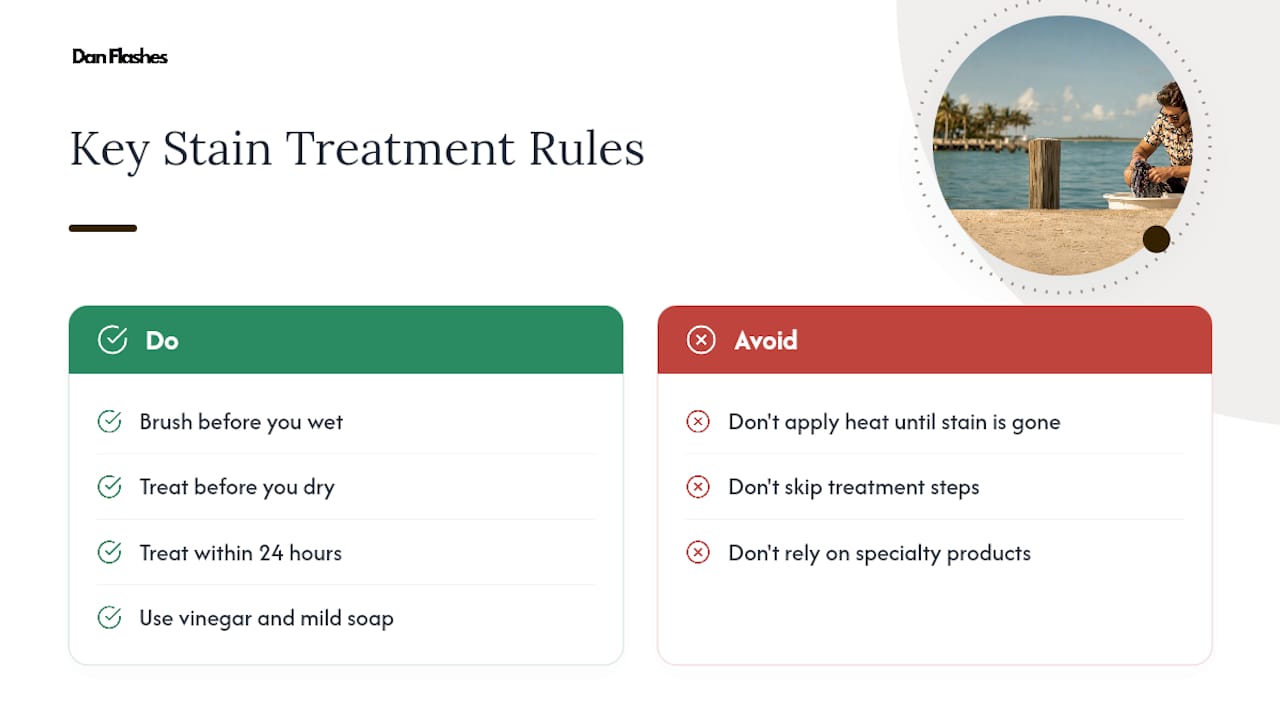
Conventional advice tends to bury the real lesson under a pile of product recommendations. The lesson that matters is this: brush before you wet, treat before you dry, and never let heat touch a stain you haven’t confirmed is gone. Skip any one of those steps and you risk setting the mark permanently, no matter how good your stain remover claims to be.
If we had to prioritize one habit, it’s the 24-hour rule. Treat the shirt before the salt has time to sit, and you’ll rarely need anything beyond vinegar, mild soap, and a little patience.
- Dan Flashes
Shirts That Hold Up Well to Regular Washing
Cotton and cotton-blend shirts are the easiest to treat at home, since they tolerate vinegar pretreatment, warm-water washing, and repeated laundering without losing their shape or color. Our Classic Beach Shirt, Hawaiian Pattern Shirt, and Pattern Hawaiian Shirt are built from exactly that kind of washable cotton.

If you want more coverage for the season, the Premium Beach Shirt, Tropical Hawaiian Pattern Shirt, Resort Pattern Beach Shirt, Summer Pattern Shirt, and Vintage Stripe Summer Shirt all follow the same wash-and-wear logic covered above. Our blog has additional care guides if you want a deeper walkthrough for any specific fabric. Browse the full beach shirt collection and pick out a print that can handle a real summer, salt and all.
Sources
For deeper detail beyond this guide, the Dry Cleaning and Laundry Institute explains why professionals flush salt with water rather than solvent. Get Fresh Start Laundry breaks down vinegar ratios step by step. The Spruce rounds up pro-recommended household items, and Build-Construct covers routine prevention timing.
- Removing Salt Stains | Dry Cleaning and Laundry Institute International
- How to Remove Salt Stains From Clothes (Winter Guide) | Get Fresh Start Laundry
- We Asked Pros for Their Proven Method for Tackling Salt Stains From Every Surface | The Spruce


