

Pick seersucker for humid climates, travel, and low-maintenance wear. Pick linen for still, dry heat and a more refined drape in suits or dress shirts. If you want a middle ground, a half-linen blend or solid-color seersucker gives you less crease and a softer feel without giving up much cooling power.
TL;DR:
- Seersucker works best in dead or humid air because its raised ridges facilitate airflow, while linen needs active movement and breeze to wick moisture effectively.
- Quality seersucker is usually more affordable, durable, and resistant to wrinkles, making it ideal for travel and quick-care situations compared to linen’s higher cost and tendency to wrinkle.
- Linen’s fabric structure provides a more formal and structured drape suited for dry heat and dressier summer events, whereas seersucker’s relaxed texture is better for casual, daytime wear.
- Blends such as half-linen or solid-color seersucker reduce creasing and soften the fabric, offering a practical middle ground that preserves cooling benefits and ease of care.
- Avoid linen in high-humidity, still conditions when minimal wrinkles are desired, and choose seersucker for packing and maintaining a sharp look without ironing.
Table of Contents
- Seersucker vs Linen: The Core Trade-Off
- How Does Seersucker Actually Cool You Down?
- Why Linen Stays a Summer Menswear Staple
- Where Linen and Seersucker Actually Overlap
- Caring for Seersucker and Linen Without Ruining Them
- How to Choose Between Seersucker and Linen
- Dan Flashes’ Take on Fabric-First Summer Style
- Shirts That Match Your Summer Fabric Priorities
- Sources
- FAQ
Seersucker vs Linen: The Core Trade-Off
The real difference between these two fabrics comes down to how they fight heat. Seersucker cools you through geometry: the fabric’s puckered ridges hold most of the cloth away from your skin, creating tiny air channels that let sweat evaporate instead of sitting against you. Linen cools you at the fiber level, through flax’s natural ability to wick moisture and absorb roughly 20% of its weight in water while pulling heat away from the body.
That mechanical split explains almost every other difference between them. Seersucker’s structure hides wrinkles by design, while linen’s wrinkles are an unavoidable side effect of the fiber’s stiffness, one that most menswear writers treat as a feature rather than a flaw. Comparative fabric research points out that linen performs best when air is actually moving, while seersucker’s raised weave keeps working even in dead, humid air, which is why it shows up so often in Southern summer wardrobes.
Here’s how the two stack up on the factors that actually affect how you’ll wear them:
- Cooling mechanism: Seersucker uses puckered geometry to create airflow gaps; linen uses fiber-level wicking and conduction.
- Wrinkling: Seersucker’s pucker disguises creases on purpose; linen creases visibly and most people leave it that way.
- Drape: Linen hangs with more structure and reads as more formal; seersucker has a looser, more textured, more casual look.
- Sweat visibility: Linen shows sweat marks faster because of its smooth, absorbent surface; seersucker’s texture camouflages moisture better.
- Cost and durability: Quality linen typically costs more and needs breaking in, while seersucker is generally easier to find at lower price points and holds up well to repeated washing.
Neither fabric is “better” in the abstract. One suits a beach wedding in July in Savannah. The other suits a linen blazer at a dry, breezy dinner in Palm Springs. The job you need done should decide the fabric, not the other way around.
How Does Seersucker Actually Cool You Down?
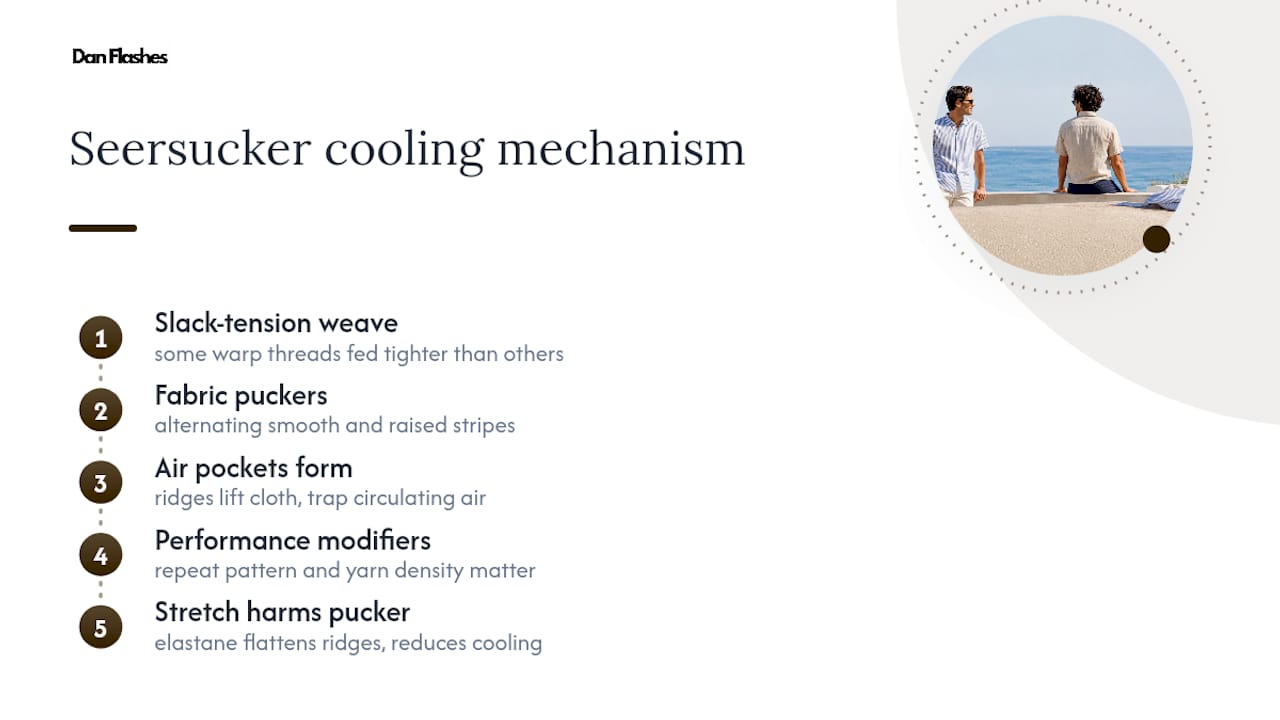
Seersucker gets its texture from a slack-tension weave, where some warp threads are fed through the loom tighter than others. That tension mismatch forces the fabric to pucker into stripes, and those raised ridges lift the cloth off your skin, creating small pockets of air that circulate and carry heat away from your body. The name itself traces back to the Persian phrase for “milk and sugar,” a reference to the fabric’s alternating smooth and puckered stripes, and it became a summer staple in hot American climates for exactly this reason.
Most seersucker on the market is 100% cotton, though solid-color versions without the classic stripe have become common for guys who want the texture without the preppy look. Structural research on seersucker weaves found that the repeat pattern and yarn density of the pucker directly affect thermal conductivity and moisture permeability, meaning not all seersucker performs the same. A tightly puckered, densely woven version will breathe differently than a looser, shallow-pucker version.
One thing to watch: elastane or heavy stretch yarns blended into seersucker can flatten the pucker over time, which quietly kills the air channels that make the fabric work in the first place. If a shirt claims to be seersucker but feels stretchy and smooth, you’re not getting the full cooling benefit.
Pro Tip: Check the fabric tag for stretch content before buying seersucker for hot weather. Pure cotton seersucker keeps its pucker and its cooling power far longer than blends with more than a small percentage of elastane.
The upside beyond cooling is practical: seersucker barely needs ironing, a point well covered in how to photograph clothing flatlays which also highlights fabric texture and presentation. The pucker hides creases naturally, which makes it one of the better fabrics for a carry-on bag or a long flight.
Why Linen Stays a Summer Menswear Staple
Linen comes from flax, a fiber that’s naturally hollow and stiffer than cotton, and that structure is what makes it breathe so well. Fabric reference sources note that linen’s longer, hollow fibers and looser weave let more air pass through than most cotton fabrics allow.
The wrinkles are the trade-off, and they’re not a manufacturing defect. Linen fibers lack the elasticity of cotton or wool, so every fold and crease shows almost immediately after you sit down or lean on a table. Menswear writers have long argued that linen’s wrinkles read as a mark of relaxed, deliberate elegance rather than sloppiness, especially in a well-cut suit or blazer.
Linen also improves with age in a way seersucker doesn’t quite match. Each wash softens the fibers a little more, and a linen shirt that felt stiff out of the box can feel closer to worn cotton after a season of wear.
Where linen wins outright:
- Still, dry heat where there’s no breeze to help seersucker’s air channels do their job
- Solid, tailored looks for weddings, dinners, or business-casual settings where seersucker’s texture feels too playful
- Long-term wardrobe investment, since quality flax holds up to years of washing better than cheaper woven cottons
- Situations where a slightly dressier drape matters more than minimal ironing
Where Linen and Seersucker Actually Overlap
Both fabrics come from plant fibers, both beat wool and heavier synthetics on breathability, and both read as more casual than a crisp dress shirt in any season other than summer. That shared DNA is why so many guys treat them as interchangeable, even though the mechanics behind their cooling are completely different.
Blends smooth out a lot of the friction between the two. A half-linen fabric, usually linen mixed with cotton, softens the hand feel and cuts down on the aggressive creasing pure linen is known for, without sacrificing much airflow. Solid seersucker without the classic stripe does something similar on the other side, giving you the texture and cooling of seersucker in a look that reads closer to a standard summer shirt.
- Both breathe well compared to wool, poly blends, or heavier cotton twills.
- Both work better in motion. Linen needs airflow to wick effectively, and seersucker’s air channels do more when you’re walking around than sitting still in a humid room.
- Blends reduce trade-offs. Half-linen softens the crease problem; solid seersucker softens the “too preppy” problem.
- Neither is ideal for extreme still humidity without help. Loose tailoring and lighter colors matter as much as fiber choice in that scenario.
If you’re new to either fabric, a blend is often the smarter first purchase. It lets you test the feel and drape before committing to a pure linen suit or a striped seersucker jacket.
Caring for Seersucker and Linen Without Ruining Them
Care is where a lot of guys either overthink these fabrics or ignore them completely, and both mistakes cost you money. Here’s a realistic maintenance routine that keeps either fabric looking sharp for years:
- Wash on a gentle, cool cycle. Both linen and seersucker hold up better in cold or lukewarm water than hot, which prevents excess fiber breakdown over repeated washes.
- Air dry when possible. High heat from a dryer accelerates wear on linen fibers and can flatten seersucker’s pucker faster than you’d expect.
- Steam instead of iron for linen. A quick steam relaxes deep creases without the flattening effect a hot iron leaves, and it preserves the fabric’s natural texture.
- Skip the iron for seersucker entirely. Ironing defeats the purpose of the pucker; a light shake after the dryer is usually all it needs.
- Store both fabrics folded, not on hangers, for long stretches. Hanging linen or seersucker for months can stretch the fibers unevenly at the shoulders.
Price generally tracks quality here. Higher-grade linen costs more because the flax processing is labor-intensive, and lower-grade versions can feel stiff and coarse until you’ve broken them in with a few washes. Seersucker tends to be more forgiving on price since cotton production scales more easily, but a denser, tighter weave with a well-defined pucker will always outperform and outlast a thin, cheaply woven version. Guys who care for their linen shirts properly tend to avoid the first-wash shrinkage problems that make people give up on the fabric too early.
How to Choose Between Seersucker and Linen
Run through a short mental checklist before you buy either fabric, and the decision gets a lot easier. Start with your climate: humid and still means seersucker, dry and breezy means linen works just as well or better. Next, think about mobility and travel. If you’re packing a bag and need something that survives a suitcase without ironing, seersucker wins almost every time.
Formality matters too. Linen suits and solid linen shirts read dressier and more tailored, which makes them the better call for weddings, dinners, or business-casual settings. Seersucker leans preppy and textured, better suited to daytime events, casual Fridays, or anywhere a little personality in the weave is welcome. And be honest with yourself about crease tolerance: if wrinkles genuinely bother you, seersucker’s hidden pucker will save you frustration that linen simply won’t.
When shopping, ask specific questions instead of trusting a product photo:
- What percentage of the fabric is natural fiber versus synthetic stretch?
- Does the seersucker have visible, consistent puckering, or is it flattened by elastane?
- Is the linen pure flax or a half-linen blend, and how does that affect crease behavior?
- Is there any structured lining that would trap heat despite the fabric choice?
Watch for red flags: linen that feels papery-thin and coarse usually signals a low grade that won’t soften properly, and seersucker padded with heavy stretch content loses the air channels that justify buying it in the first place. A dense, tightly woven fabric marketed as “breathable” without visible texture or an open weave deserves a second look, too. Understanding how texture itself affects perceived comfort helps explain why a puckered or slightly rougher weave often feels cooler against skin than a smooth one, even at the same fiber weight.
Pro Tip: For suits, linen almost always looks more intentional. For everyday shirts you’ll wear on vacation or in the heat of the day, seersucker’s low-maintenance advantage usually wins out.
Dan Flashes’ Take on Fabric-First Summer Style
Comfort and style shouldn’t compete, which is why Some brands build shirts from linen, cotton, and sustainable bamboo hemp rather than betting on one fiber. Each material solves a different job from the checklist above: breathability, drape, or easy care. Every linen fabric piece in the lineup carries the same 30-day money-back guarantee, so testing a fabric against your own climate and routine carries no real risk.
- Dan Flashes
Shirts That Match Your Summer Fabric Priorities
If seersucker’s low-maintenance, textured cooling is what pulled you into this comparison, the Vintage Stripe Summer Shirt delivers that same puckered, easy-care feel without demanding a single pass of the iron before a trip.
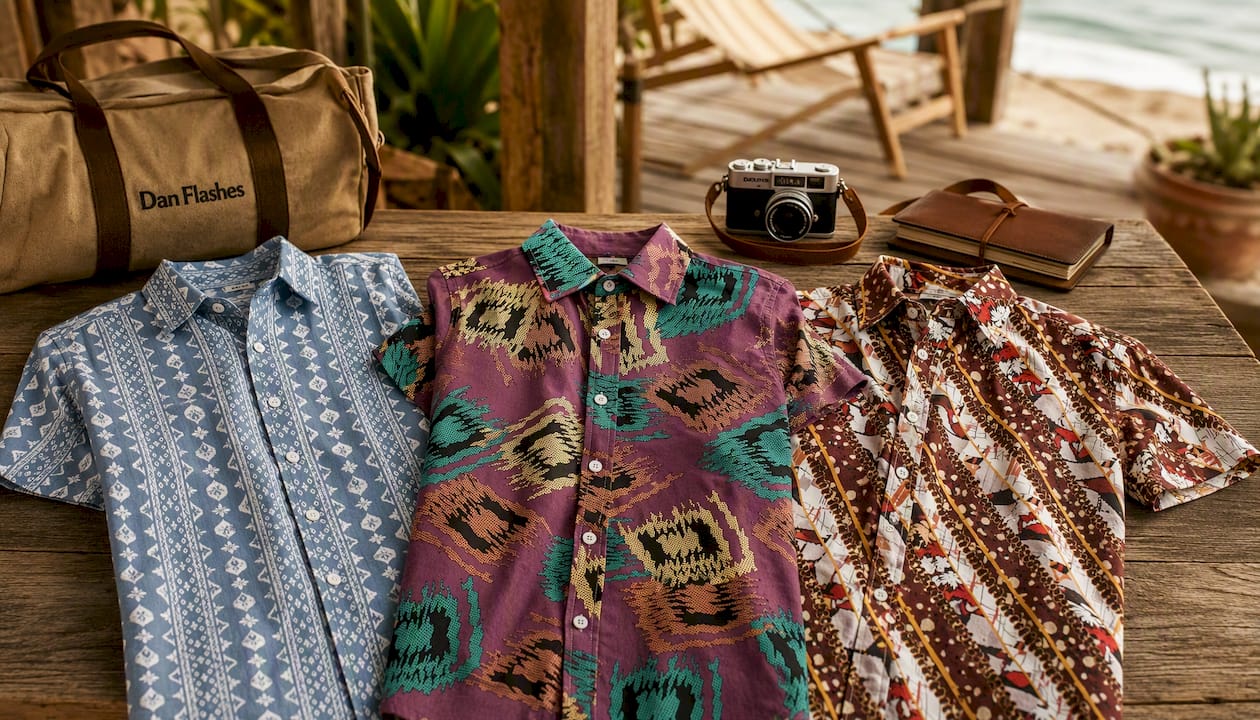
If you lean toward linen’s drape and a more breathable, tailored look for warm-weather days, the Summer Button-Up Shirt gives you that lighter hand and structured hang without the stiffness that turns some guys off pure linen early on. And if what you actually want is bold summer personality over either fabric’s technical trade-offs, the Summer Pattern Button-Up Shirt puts vibrant, intricate patterns on breathable material built for heat, not just for looking good in a photo.
Many shirts ship with a 30-day money-back guarantee, so if a fabric doesn’t perform the way you expected in your climate, you’re not stuck with it. Pick the SKU that matches your priority from the checklist above and place your order today.
Sources
This comparison draws on fabric science from Pinecrest Fabrics and Hacoy on weave structure and flax fiber behavior, peer-reviewed research from De Gruyter Brill on seersucker’s thermal properties, and style commentary from GQ and Bespoke Unit on real-world wear and cost expectations.
- Seersucker fabric
- Linen 101: the science behind nature’s original performance fabric
- Seersucker Vs Linen: Summer Suit Fabric Showdown | Bespoke Unit
FAQ
What Are the Downsides of Seersucker Fabric?
Seersucker’s casual, textured look can feel too playful for formal events, and stretch blends with heavy elastane content flatten the pucker over time, reducing the airflow that makes the fabric useful in the first place.
Why Is Seersucker So Expensive?
Seersucker itself is usually cheaper than linen to produce, but well-made versions with a tight, well-defined pucker and pure cotton construction cost more than thin, mass-produced weaves that lose their texture quickly.
Can You Wear Linen With Seersucker?
Yes. Pairing a linen blazer or trouser with a seersucker shirt works well because both fabrics share a relaxed, breathable register, and the textures contrast nicely without clashing in formality.
When Should You Avoid Wearing Linen?
Skip linen for high-humidity, low-airflow environments where its wicking advantage matters less, and avoid it for events where visible wrinkling would read as careless rather than intentional, such as formal business settings with a strict dress code.
Is Seersucker Better Than Linen for Travel?
Generally, yes. Seersucker’s puckered weave hides creases and needs little to no ironing, which makes it more practical for packing than linen, which wrinkles visibly and often needs a steam or press after a long trip.


